How to Import Pistachios from Iran in 2025 (Step-by-Step Guide)
Global Sourcing of Premium Persian Pistachios

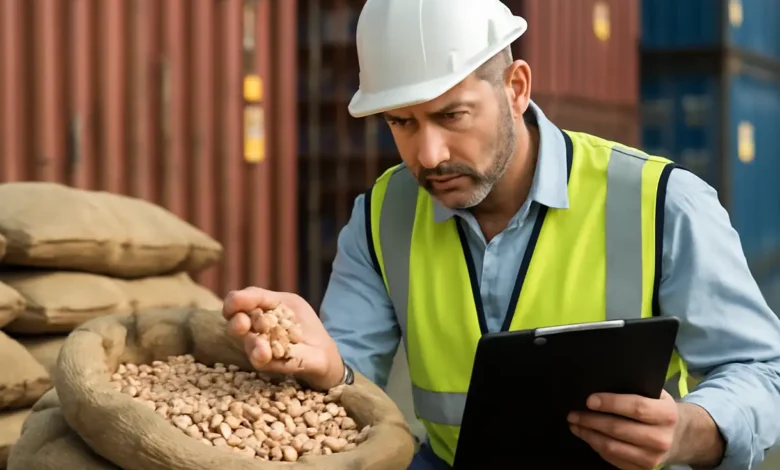
How to import pistachios from Iran is a key question for international food traders, wholesalers, and snack distributors who want to access premium, high–profit nut products. Iran is one of the world’s top pistachio (پسته) producers, accounting for over 50% of global output in multiple years according to the International Nuts & Dried Fruits Council (INC, 2024). With strong global demand and naturally rich flavors, importing pistachios from Iran can be a highly rewarding business opportunity, especially when followed through a clear 6-step import process explained in this guide.
Introduction to Importing Pistachios
This guide offers a clear step-by-step overview of how to import pistachios from Iran, including supplier selection, export documentation, quality standards, customs requirements, and cost factors. You will also learn about the key Iranian pistachio varieties such as Akbari (اکبری), Ahmad Aghaei (احمدآقایی), and others to help you choose the best options for your market.
In this article, you will learn:


-
Why Iranian pistachios are considered premium worldwide
 .
. -
How to import pistachios from Iran (practical steps)
-
Required quality certificates and inspections
-
Main types of Iranian pistachios and their characteristics
-
Estimated costs, logistics options, and best practices
Whether you are a food manufacturer, wholesale distributor, private label brand, or retail importer, this guide will help you enter the market of importing Iranian pistachios efficiently and safely.
Why Iran is the Best Source for Pistachios
Iran is widely recognized as the world’s largest producer of pistachios, known for its exceptional climate and soil conditions that contribute to the high quality of its nuts. The country’s pistachios are highly sought after worldwide for their rich flavor, diverse varieties, and consistent supply. Here’s why Iranian pistachios are considered among the best:
-
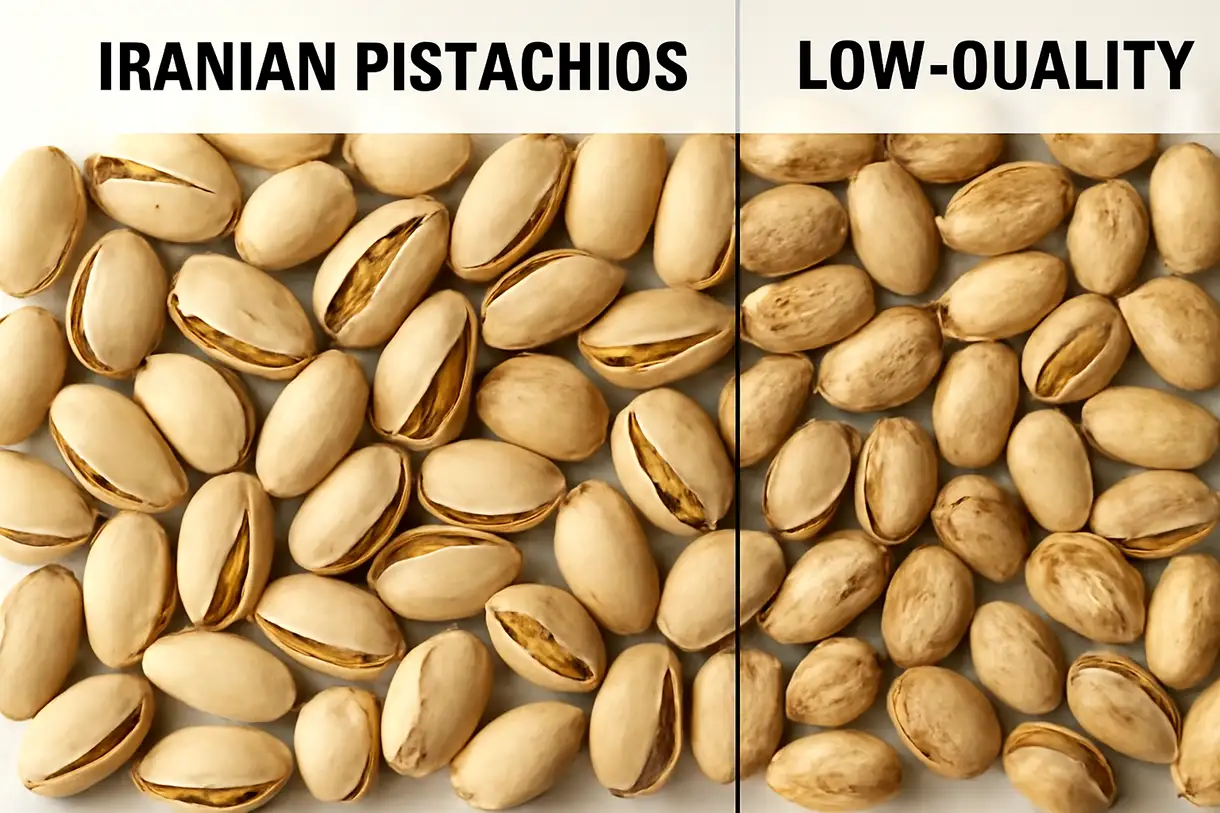
Top Quality: Iranian pistachios are renowned for their superior taste, texture, and nutritional value. Due to the region’s climate, which includes hot summers and cold winters, pistachios in Iran develop a unique flavor profile that is difficult to replicate elsewhere.
-
Diverse Varieties: Iran produces several distinct types of pistachios, each with unique characteristics that appeal to different markets. The most notable varieties include:
-
Akbari (اکبری): Large, elongated nuts with a rich, savory taste, ideal for premium markets.
-
Ahmad Aghaei (احمدآقایی): Medium-sized, easy-to-shell pistachios popular for both retail and bulk export.
-
Fandoghi (فندقی): Small and round, commonly used in snacks and bulk purchases.
-
Abbas Ali (عباسعلی): Known for their large size and excellent flavor, making them one of the highest-quality exports.
-
-
Global Demand: Iranian pistachios are highly demanded in markets worldwide, particularly in the Middle East, Europe, North America, and Asia. The export of pistachios from Iran continues to grow, with international consumers seeking their distinct taste and quality.
-
Sustainability and Tradition: Pistachio farming in Iran has a long history, with many families passing down farming knowledge across generations. This deep-rooted tradition in cultivation ensures that the quality remains high year after year, and sustainable farming practices are a priority in many regions.
-
Competitive Pricing: While Iranian pistachios are considered premium quality, they often come at more competitive prices compared to pistachios from other leading countries like the United States. This makes Iranian pistachios an attractive option for bulk buyers and those looking for high-quality nuts at a lower price.
With its top-notch quality, rich variety, and significant market demand, Iran stands out as the leading source for pistachios. Whether you’re importing Akbari, Ahmad Aghaei, or another variety, you’re guaranteed to receive some of the best pistachios available globally.
Steps to Import Pistachios from Iran
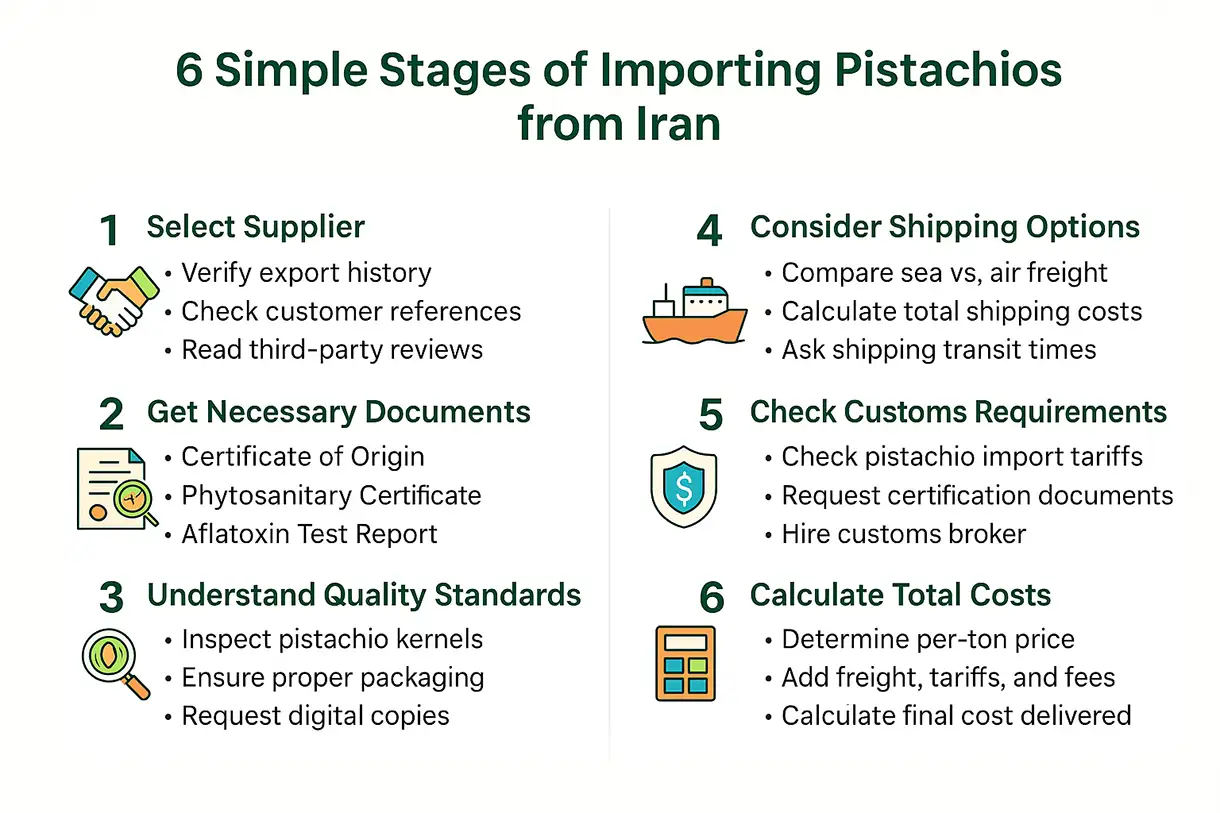
Importing pistachios from Iran is a straightforward process if you follow each step carefully. From choosing a reliable supplier to clearing customs, these steps will help ensure a smooth transaction. Here is a practical guide on how to import pistachios from Iran:
Step 1: Find a Reliable Supplier
Work only with certified Iranian pistachio producers or export companies. A reliable supplier should provide:
-
Product certificates (ISO, HACCP, Organic if required)
-
Moisture level test reports
-
Aflatoxin test results
-
Clear packaging and labeling options
Tip: Prefer suppliers located in Kerman (کرمان), Rafsanjan (رفسنجان), and Sirjan (سیرجان) — the main pistachio hubs of Iran.
Step 2: Check Import Regulations
Before buying pistachios, confirm your country’s requirements for:
-
Aflatoxin maximum level
-
Phytosanitary certificate
-
Food import license
-
Label language rules
-
Tariff & HS Code (usually HS Code: 0802.50 for pistachios)
Countries like the EU and Japan have strict aflatoxin limits, so ensure your supplier can meet those standards.
Step 3: Request Samples and Quality Verification
Before signing a contract, always request:
-
Physical samples
-
Moisture level test
-
Aflatoxin test
If possible, use a third–party inspection company such as SGS, Bureau Veritas, or Intertek in Iran to verify the shipment quality before export.
Step 4: Place an Order and Sign a Contract
A professional contract should cover:
-
Type of pistachio (e.g., Akbari (اکبری), Ahmad Aghaei (احمدآقایی))
-
Quantity (in kg/tons)
-
Packaging type (vacuum, 25 kg bags, retail packs)
-
Delivery terms (FOB Bandar Abbas, CIF, or DAP)
-
Payment methods (LC, TT, escrow, advance + balance)
Step 5: Shipping Arrangements
Pistachios from Iran are usually shipped via:
-
Sea freight (FCL) for bulk orders
-
Air freight for small premium shipments
Common departure ports: Bandar Abbas (بندرعباس) and Bandar Imam Khomeini (بندرامام).
Step 6: Customs Clearance
Upon arrival in your country, your customs broker will need:
-
Commercial invoice
-
Packing list
-
Certificate of origin
-
Phytosanitary certificate
-
Aflatoxin report (if required)
-
Bill of lading (B/L)
Once cleared, your shipment can be delivered to your warehouse or distribution center.
Summary of the Import Process
| Step | Action |
|---|---|
| 1 | Find reliable supplier |
| 2 | Check regulations |
| 3 | Request tests & samples |
| 4 | Sign contract & pay |
| 5 | Ship from Iran |
| 6 | Clear customs |
Key Considerations Before Importing Iranian Pistachios
Before you import pistachios from Iran, it is essential to evaluate product quality, legal requirements, and shipment conditions. Making informed decisions at this stage will protect your business from financial loss and quality issues. Here are the most important considerations:
Product Quality and Aflatoxin Control
One of the most critical quality factors in pistachios is aflatoxin, a naturally occurring toxin that must be strictly controlled.
-
Request aflatoxin test reports for every shipment.
-
Ensure your pistachios meet the maximum limit for your target country (for example, the EU limit is 10 ppb for ready–to–eat nuts).
-
Choose suppliers that use modern drying and storage technology to reduce contamination risks.
Certifications to Request
Reliable suppliers of Iranian pistachios should offer the following documents when required by your market:
-
Phytosanitary Certificate
-
Certificate of Origin
-
Aflatoxin Test Certificate
-
ISO 22000 / HACCP for food safety
-
Organic Certificate (if applicable)
Tip: Always keep digital copies of all certificates for customs clearance and audits.
Packaging and Storage Conditions
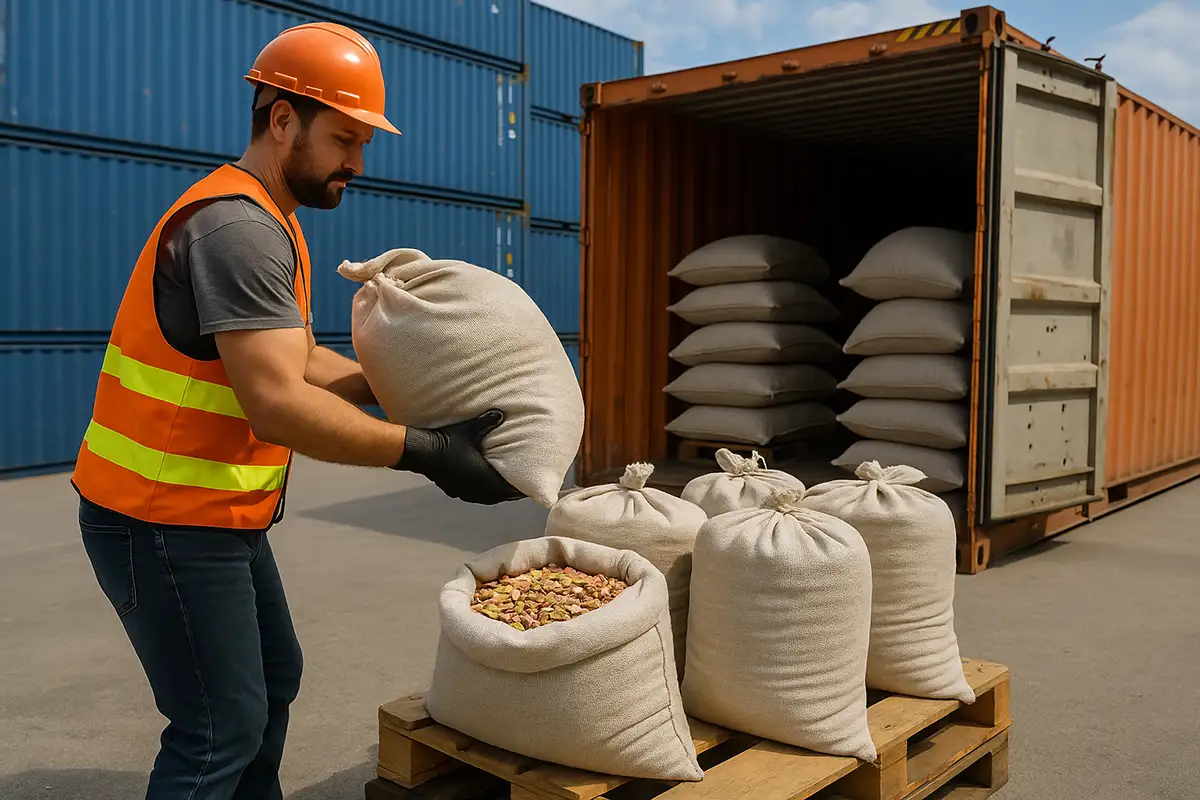
Proper packaging ensures the pistachios remain fresh during shipping:
-
Choose vacuum packaging for long distances and high–moisture climates.
-
Bulk shipments are usually packed in 25 kg or 50 kg bags.
-
Storage temperature should be between 0°C to 10°C (0 تا 10 درجه) to prevent mold and oxidation.
Customs Duties and Tariffs
Check your country’s import tariffs for HS Code 0802.50 (pistachios). Tariffs differ by country:
-
Some Middle Eastern countries have 0% duty on Iranian pistachios.
-
The EU applies specific tariffs depending on the product type and packaging.
-
North America may require additional food safety documentation, depending on the shipment.
Supplier Reputation and Track Record
Avoid working with unknown traders. Choose exporters from major pistachio regions such as Kerman (کرمان), Rafsanjan (رفسنجان), Sirjan (سیرجان), and Yazd (یزد). Check:
-
Export history
-
Third–party reviews
-
Customer references
-
Production capacity per year
Price Volatility
Pistachio prices can fluctuate due to factors like crop size, exchange rate changes, and international demand. Monitor:
-
Annual harvest reports in Iran
-
Global demand forecasts by INC (International Nuts & Dried Fruits Council)
By paying attention to these key factors, you can ensure safe, compliant, and profitable importing when buying pistachios from Iran.
Where to Buy Iranian Pistachios
Finding reliable sources for Iranian pistachios is crucial for a smooth import process. There are several ways to purchase these premium nuts, each with its advantages. Here are some of the best options for buying pistachios from Iran:
Trusted Suppliers and Exporters
Look for suppliers with a proven track record in the pistachio export industry. Reliable exporters will typically:
-
Be ISO-certified and adhere to international food safety standards
-
Provide detailed product specifications, including moisture levels and aflatoxin reports
-
Offer secure payment terms, such as Letter of Credit (LC) or bank transfer for large transactions
-
Include third-party inspection certificates for quality assurance
Some well-known Iranian pistachio suppliers include: -
Nuts of Iran: Specializing in large shipments and bulk orders, with a strong reputation in Europe and North America.
-
Iran Pistachio Exporters Association: A collective of certified suppliers providing access to the best pistachio farms across Iran.
You can also check industry-specific platforms like Alibaba or TradeKey, which feature verified Iranian pistachio exporters.
B2B Marketplaces and Wholesale Platforms
Online B2B platforms are a convenient way to connect with multiple Iranian pistachio suppliers at once. Some popular options include:
-
Alibaba: A global B2B platform with numerous Iranian pistachio suppliers.
-
Made-in-China: While mainly for Chinese products, many Iranian pistachio wholesalers also list here.
-
Tradekey: Connects international buyers with Iranian pistachio producers, offering competitive prices and access to various suppliers.
These platforms usually include ratings, reviews, and detailed product descriptions to help you evaluate the quality and reliability of the suppliers.
Attending Trade Fairs and Exhibitions
Trade fairs are an excellent opportunity to meet pistachio producers face-to-face and establish long-term relationships. Some key trade events where you can find Iranian pistachio suppliers include:
-
Iran Agrofood: Held annually in Tehran, this is one of the largest food and agricultural trade fairs in the region, showcasing pistachio producers.
-
Gulfood (Dubai): A major international trade fair where Iranian pistachio exporters exhibit their products.
-
Anuga (Germany): Another top event for international food suppliers, including those from Iran.
At these fairs, you can inspect samples, discuss terms in person, and build trust with suppliers.
Local Importers and Distributors
Some local distributors specialize in importing Iranian pistachios. These companies handle all aspects of the import process, including customs clearance, storage, and distribution:
-
Middle Eastern and European importers often have direct access to pistachio farms in Iran and offer competitive pricing for large-scale orders.
-
You can contact local Iranian food importers in your country or region, many of which operate under well-known brands.
Directly from Iranian Farmers
If you’re looking for a more direct route, working with Iranian pistachio farms is an option, although it often requires larger orders and dealing with the logistics of international shipping. Some large farms in Kerman and Rafsanjan offer direct selling to bulk buyers. However, this route requires:
-
Greater upfront capital
-
Handling your own export arrangements and customs clearance
By choosing a reliable supplier, whether through B2B platforms, trade fairs, or direct farm purchases, you can ensure that the pistachios you import are of the highest quality and meet all necessary standards.
Cost of Importing Pistachios from Iran
The cost of importing pistachios from Iran depends on several factors, including product type, packaging, international freight, and customs duties. Understanding these cost components will help you calculate the final delivered price to your warehouse.
Pistachio Price Range (Wholesale)
Different pistachio varieties have different market values based on size, flavor, and global demand. Average bulk export prices from Iran:
| Pistachio Type | Approx. Price per Kg (FOB Iran) |
|---|---|
| Akbari (اکبری) | $8 – $11 |
| Ahmad Aghaei (احمدآقایی) | $7 – $9 |
| Fandoghi (فندقی) | $5 – $7 |
| Abbas Ali (عباسعلی) | $10 – $13 |
Note: Prices vary depending on annual harvest, currency exchange, and export demand.
Shipping Costs
-
Sea Freight (FCL) is the most economical option for bulk purchases (larger than 10 tons).
-
Air Freight is suitable for smaller, premium shipments or urgent orders.
-
Shipping from Iran typically departs via Bandar Abbas (بندرعباس) or Bandar Imam (بندرامام).
| Route | Estimated Cost (per ton) |
|---|---|
| Iran → Europe (sea) | $120 – $250 |
| Iran → Asia (sea) | $90 – $180 |
| Iran → USA (sea) | $200 – $380 |
| Air Freight | $3 – $5 per Kg extra |
Customs Duties and Tariffs
Tariff rates depend on your country’s regulations under HS Code 0802.50. Examples:
-
Middle East (UAE, Qatar, Oman): 0% duty
-
Europe (EU): varies by product & packaging
-
Canada & USA: may require additional food safety documentation
Additional Costs
-
Third–party inspection (e.g., SGS): $300 – $900 per shipment
-
Local customs broker fees
-
Warehouse handling & inland transport
Best Practices for Importing Pistachios from Iran
Ensuring product safety and protecting your investment are essential for successful importing. Follow these best practices to secure reliable, high-quality shipments.
Use Third-Party Inspection
Always hire trusted inspection services such as SGS, Intertek, or Bureau Veritas to:
-
Verify moisture levels
-
Test aflatoxin limits
-
Confirm packaging and weight accuracy
-
Inspect container loading
Choose the Right Packaging
For long-distance shipments and humid climates:
-
Prefer vacuum packaging
-
Avoid low-quality bags that increase mold risk
-
Ensure clear labeling according to your local regulations
Maintain Proper Storage
To preserve freshness:
-
Store pistachios at 0°C to 10°C (0 تا 10 درجه)
-
Keep in dry, humidity-controlled areas
-
Avoid exposure to sunlight and heat
Monitor Shipment Logistics
Track your shipment and retain all digital documents:
-
Bill of Lading (B/L)
-
Certificates
-
Inspection records
This ensures faster customs clearance and avoids delays.
Comparison: Iran vs. USA vs. Turkey in Pistachio Exports
To better understand the business advantages of importing pistachios from Iran, it’s helpful to compare Iran with other key pistachio suppliers in the global market. Each exporter has different strengths, risks, and pricing strategies that affect international buyers.
| Country | Strengths | Weaknesses | Average Export Price (FOB) | Best For |
|---|---|---|---|---|
| Iran | Best flavor profile; largest varieties (Akbari (اکبری), Ahmad Aghaei (احمدآقایی)); competitive pricing; strong global demand | Currency fluctuations; strict aflatoxin control required for EU | $5–$13/kg | Premium retail, luxury snacks, diverse markets |
| USA (California) | Most consistent aflatoxin regulations; advanced mechanized farming; stable logistics | Higher cost; fewer varieties; less intense flavor | $8–$18/kg | High-regulation markets (EU, Japan), large-scale brands |
| Turkey | Low labor cost; acceptable quality; good distribution in Europe | Limited varieties; inconsistent kernel quality; less global demand | $4–$9/kg | Budget bulk markets, snack factories |
Market Insight
-
Iran leads in flavor diversity and pricing flexibility, making it ideal for brands that want premium taste with scalable pricing.
-
The United States offers reliability over pricing, appealing to strict regulatory markets.
-
Turkey competes through cost, making it suitable for bulk or industrial snack processing.
Conclusion
Importing pistachios from Iran is a profitable venture for international buyers who seek premium-quality nuts backed by strong market demand. By choosing reputable suppliers, verifying aflatoxin standards, understanding shipping options, and calculating all costs, you can confidently bring Iranian pistachios into your target market.
Key takeaways:
-
Iran offers the world’s finest pistachio varieties, including Akbari (اکبری) and Ahmad Aghaei (احمدآقایی).
-
A successful import requires proper certification, inspection, and packaging control.
-
Competitive pricing and global demand make Iranian pistachios a strong business investment.
Ready to start importing?
Begin by contacting certified Iranian suppliers and requesting quality samples. The right business partnership can unlock long-term profit in the global nut industry.
FAQ – About How to Import Pistachios from Iran
1) Is it profitable to import pistachios from Iran?
Yes. Importing pistachios from Iran is highly profitable due to:
-
Competitive FOB prices
-
Global demand for premium varieties like Akbari (اکبری) and Ahmad Aghaei (احمدآقایی)
-
Lower production costs in Iran
Buyers can achieve strong margins, especially in retail and private-label packaging.
2) What documents are required to import pistachios from Iran?
Most countries require:
-
Phytosanitary Certificate
-
Certificate of Origin
-
Aflatoxin Test Report
-
Commercial Invoice
-
Packing List
-
Bill of Lading
Some markets (like the EU and Japan) may require stricter aflatoxin limits and additional food safety documentation.
3) Which Iranian pistachio varieties are best for export?
The most exported types are:
-
Akbari (اکبری) – premium markets, large size
-
Ahmad Aghaei (احمدآقایی) – popular retail choice, high demand
-
Fandoghi (فندقی) – best for bulk snacks and wholesale
-
Abbas Ali (عباسعلی) – limited supply, high value
4) How can I verify pistachio quality before shipment?
Use third-party inspection agencies like SGS, Intertek, or Bureau Veritas to check:
-
Aflatoxin levels
-
Moisture percentage
-
Size/grade
-
Packaging and container loading
5) How long does shipping from Iran take?
-
Sea freight: 10–40 days depending on destination
-
Air freight: 3–7 days
Most shipments depart via Bandar Abbas (بندرعباس) or Bandar Imam (بندرامام).
6) What HS Code is used for importing pistachios?
The standard HS Code for pistachios is:
0802.50
This code covers both shelled and in-shell pistachios. Check the exact tariff in your destination country.
7) Are Iranian pistachios safe to import regarding aflatoxin?
Yes, if purchased from certified suppliers who provide:
-
Aflatoxin test reports
-
Moisture control data
-
Proper storage and packaging
Countries like the EU have strict limits, but reputable exporters comply with these standards.
8) Can I import small quantities directly from farmers?
Yes, but small imports often require:
-
Handling your own customs paperwork
-
Paying higher costs per kg due to freight
Small businesses usually prefer buying through export companies or local importers for easier logistics.
9) What is the best packaging option for long-distance importing?
For long shipping routes or humid climates, choose:
-
Vacuum packaging
-
Climate-controlled containers if needed
This reduces oxidation and aflatoxin risk.
10) Do I need a food import license to import pistachios?
In many countries, yes. Food importers must hold:
-
A Food Business Operator license (FBO) or its equivalent
-
Registration with local food safety authorities
Rules vary by region, so check your market’s regulations.
Sources: