Internet Disruptions in Iran: Economic Implications for Businesses and Investors
Internet Shutdown In Iran: Economic Implications


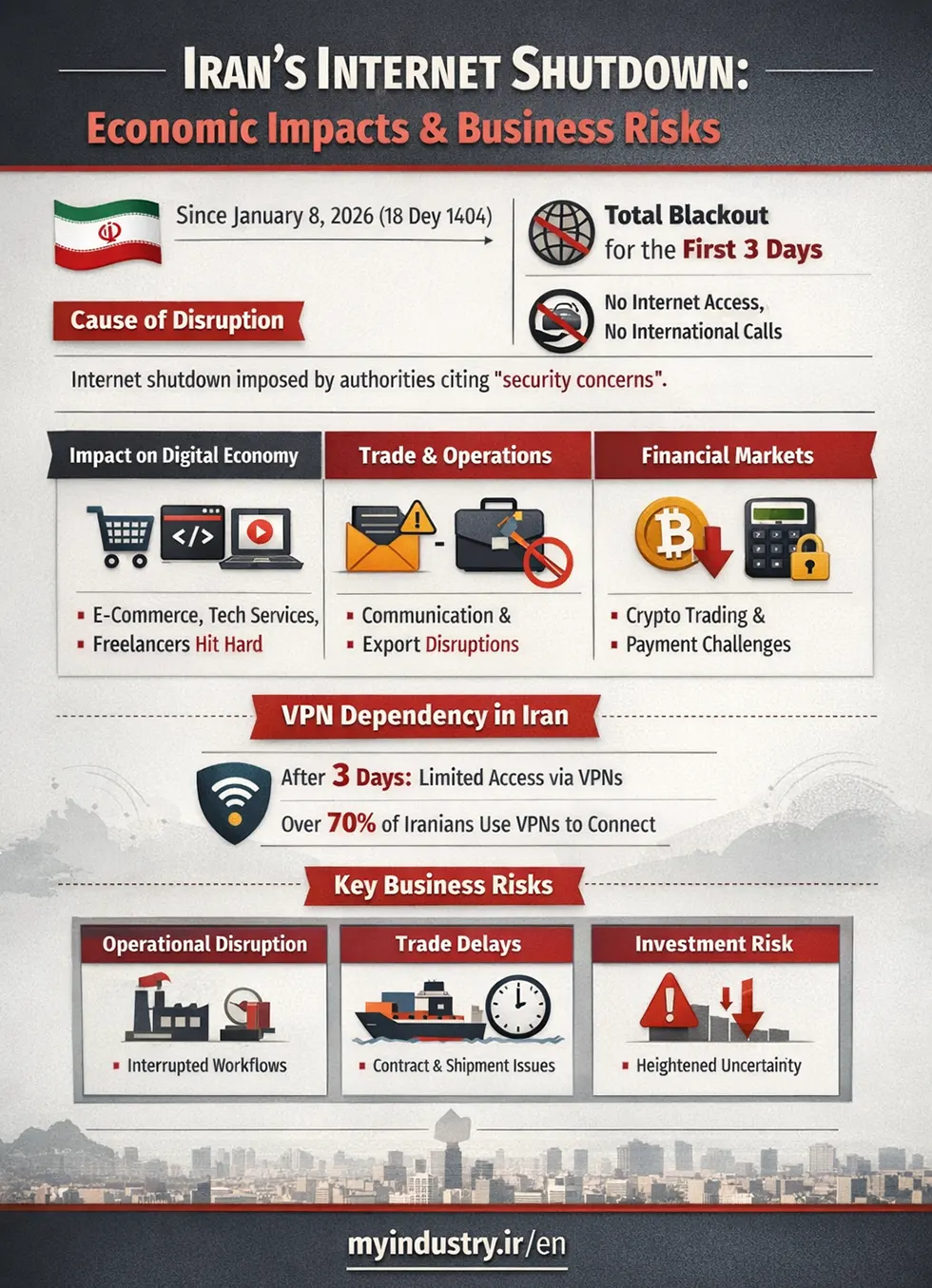
On January 7, 2026 (18 Dey 1404), Iran experienced a nationwide internet shutdown that went far beyond routine throttling. For approximately the first three days, international connectivity was almost completely cut off. Not only was internet access unavailable, but even international phone calls (00 dialing) were disrupted, effectively isolating the country from global communication channels.
After this initial phase, limited access gradually returned. However, connectivity remained unstable and, in practice, largely dependent on VPN usage, which itself was unreliable and inconsistent.
This article avoids political interpretation and instead focuses on a critical question for international audiences:
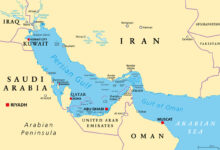

What do internet shutdowns mean for doing business in Iran?
.

Brief Context: Why the Internet Was Cut
Iran has a long history of imposing temporary internet restrictions during periods of heightened internal tension or security concerns. The January 2026 shutdown followed this familiar pattern.
What made this episode notable was:
- The near-total disconnection during the first 72 hours
- The simultaneous disruption of international voice communication
- The speed with which businesses lost access to external markets, partners, and platforms
While official explanations emphasized security and control, the economic consequences unfolded immediately and predictably.
The First 72 Hours: A De Facto Digital Blackout in Iran
For three full days:
- Websites hosted outside Iran were unreachable
- Email services failed
- Cloud-based tools, CRMs, and collaboration platforms were inaccessible
- International calls via landline and mobile networks were largely unavailable
For foreign companies working with Iranian partners, this period created a sudden information vacuum:
- Contracts stalled
- Deliverables could not be confirmed
- Payments and invoicing processes froze
From a business-risk perspective, this phase resembled a temporary but absolute operational shutdown.
Partial Restoration: VPN-Dependent Connectivity
After day three, connectivity did not return in a conventional sense.
Instead:
- Access to global services became possible only through VPNs
- Connection quality was unstable
- Many VPN services were blocked or throttled intermittently
It is important for external observers to understand that VPN usage in Iran is not marginal.
VPN Penetration in Iran
Despite restrictions, Iran has one of the highest VPN penetration rates globally. VPNs are widely used by:
- Businesses
- Freelancers
- Developers
- Digital marketers
- Students and academics
In practice, VPNs function as informal infrastructure, enabling Iran’s digital economy to remain partially connected to the outside world even under restrictions.
For many Iranian businesses, VPN access is no longer optional—it is a prerequisite for international participation.
However, VPN-dependence introduces:
- Latency and reliability issues
- Higher operational friction
- Increased cybersecurity and compliance risks
For international partners, this means that continuity often depends not on official infrastructure, but on workarounds.
Economic Impact by Sector
1. Digital Economy and Services
The most immediate damage occurred in:
- E-commerce
- Software and SaaS development
- IT outsourcing
- Digital marketing and analytics
Iran exports a significant volume of digital labor and services, even if unofficially. Internet disruption directly interrupts this export channel, increasing perceived unreliability.
2. Trade, Logistics, and B2B Operations
While physical trade did not stop, coordination did:
- Delays in documentation
- Disrupted communication with freight forwarders and brokers
- Slower decision cycles
For foreign firms, this raised the transaction cost of doing business with Iran.
3. Financial Flows and Crypto Markets
Restrictions also affected:
- Access to international crypto exchanges
- Liquidity management
- Cross-border settlements conducted through informal or semi-formal channels
Periods of connectivity loss tend to amplify market inefficiencies and volatility in these parallel financial systems.
Strategic Takeaway for International Stakeholders
Internet shutdowns in Iran should not be viewed as isolated technical events. They represent a form of infrastructure risk with clear economic implications.
Key questions foreign businesses should ask:
- Can operations tolerate sudden communication blackouts?
- Are contingency channels in place?
- Is the Iranian partner structurally dependent on VPN-based access?
The answers to these questions increasingly shape risk pricing, contract design, and long-term engagement strategies.
Conclusion
The January 2026 internet disruption demonstrated that Iran’s connection to the global digital economy remains fragile and conditional.
While high VPN penetration allows partial adaptation, it does not eliminate risk. Instead, it shifts Iranian businesses into a gray zone of connectivity—functional, but unstable.
For investors, analysts, and international partners, understanding this reality is essential. The issue is not whether Iranian businesses are capable, but whether the operating environment allows consistency.
In emerging markets, uncertainty is expected. In Iran, digital uncertainty has become structural.
Published by MyIndustry Consulting Group – Analysis on Iran’s Business Environment