Sofa Price in Iran (2026) | Market Rates, Factory Prices
Latest Sofa Market Rates in Iran (2026)

Latest Sofa Market Rates in Iran (2026)
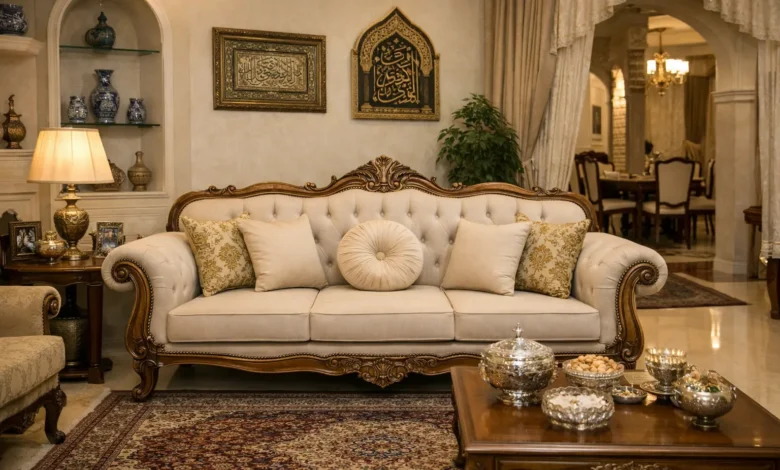
Based on current showroom observations across major urban markets, a standard 7-seater sofa set typically ranges between 180,000,000 to 340,000,000 IRR. Using an exchange rate of 1 USD = 1,550,000 IRR, this corresponds approximately to:
- $116 – $219 USD for most mid-market retail models
While luxury carved or premium hardwood models may exceed this range, the majority of consumer demand in Iran is concentrated between 220,000,000 and 320,000,000 IRR, making this the core pricing band of the domestic sofa market. (Statistical Center of Iran – Consumer Price Index (Furniture & Household Equipment)
How Much Does a Sofa Cost in Iran in 2026?
In 2026, the average sofa cost in Iran varies depending on size, material, and whether the purchase is made through retail showrooms or directly from manufacturers. For standard 7-seater configurations, the couch price in Iran typically falls within the mid-range bracket of 220,000,000 to 320,000,000 IRR, while luxury or carved hardwood designs can exceed 500,000,000 IRR.
 .
.
When analyzing the broader Iran furniture price landscape, sofas remain one of the most price-sensitive household categories. Compared to imported furniture markets, Iran sofa market 2026 conditions reflect strong domestic production, which helps keep pricing relatively competitive within the region.
For buyers looking to buy sofa in Iran, pricing differences depend heavily on distribution channel. Retail showrooms include overhead and marketing costs, while factory sofa price Iran levels are often 10–20% lower for similar models, especially for bulk or negotiated purchases.
Overall, the sofa cost in Iran is primarily shaped by material quality, labor intensity, and exchange rate dynamics rather than international brand premiums. This makes Iran a mid-range competitive furniture market rather than a luxury-dominated one.
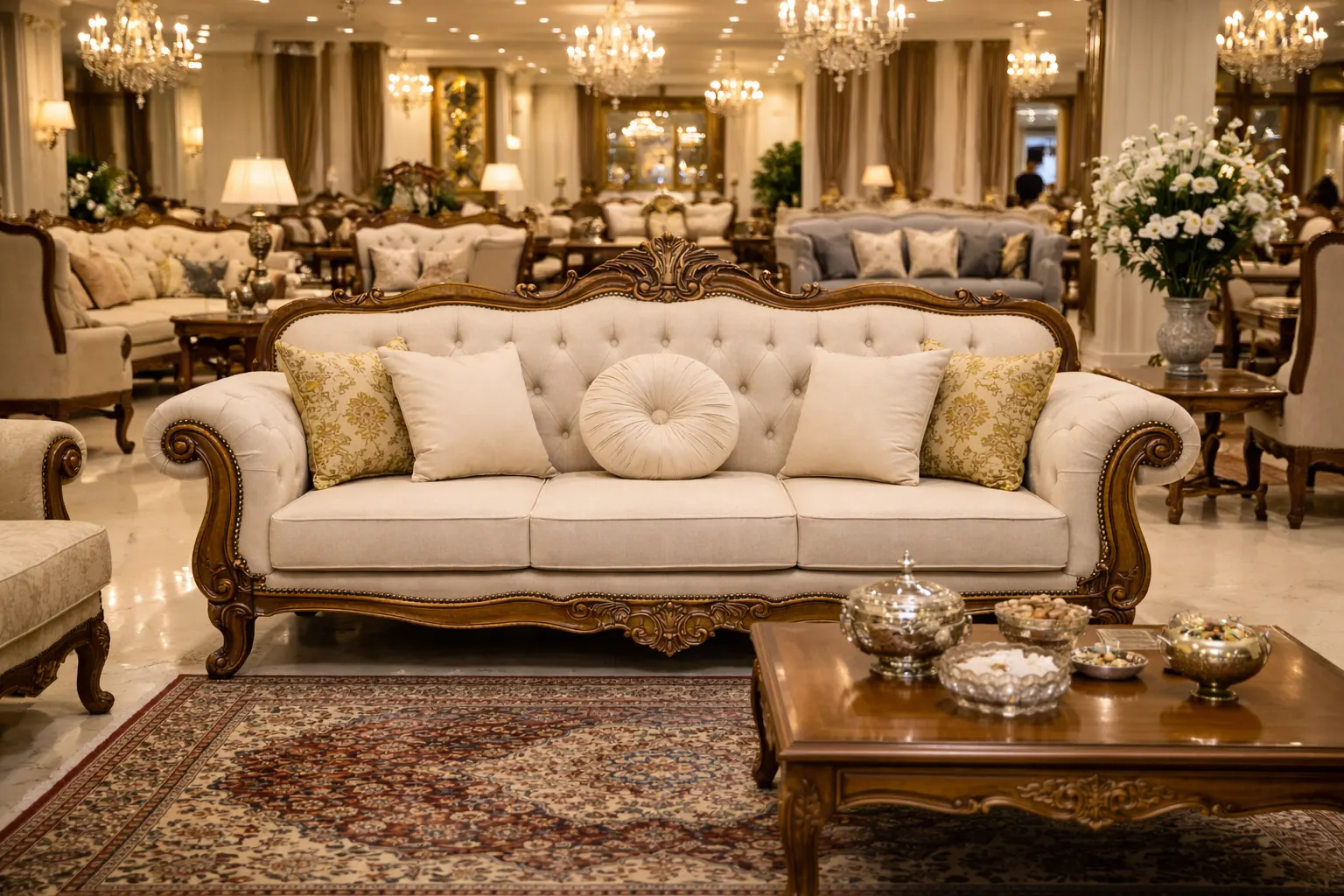
Average Sofa Price in Iran (USD & IRR)
The average sofa price in Iran depends on configuration and material quality. The following ranges refer to complete 7-seater sofa sets, which represent the standard configuration in the Iranian market.
Based on market averages in 2026:
- Budget segment: 150,000,000 – 220,000,000 IRR
- Mid-range segment (most active market): 220,000,000 – 320,000,000 IRR
- Upper mid / Semi-luxury: 320,000,000 – 500,000,000+ IRR
At an exchange rate of 1 USD = 1,550,000 IRR, this equals approximately:
- $97 – $142 USD (Budget)
- $142 – $206 USD (Mid-range)
- $206 – $322+ USD (Upper segment)
The center of gravity of the Iranian sofa market sits around 250,000,000 – 300,000,000 IRR (approximately $161 – $193 USD), where the majority of showroom transactions occur.
7-Seater and 8-Seater Sofa Prices
The 7-seater configuration is the most common sofa format in Iran, typically including a three-seat unit, a two-seat unit, and two single chairs. Some variations include 8-seater configurations.
Estimated 2026 retail ranges:
- 7-Seater Fabric Sofa: 200,000,000 – 320,000,000 IRR ($129 – $206 USD)
- Higher-End 7-Seater Models: 320,000,000 – 450,000,000 IRR ($206 – $290 USD)
- 8-Seater Sets: 280,000,000 – 500,000,000+ IRR ($180 – $322+ USD)
Approximately 60–70% of retail activity is concentrated in mid-range 7-seater fabric sofas, making this configuration the benchmark for evaluating sofa price levels in Iran.
Average Sofa Price Table (USD & IRR)
| Segment | Price (IRR) | Price (USD) |
|---|---|---|
| Budget Sofa Set | 150M – 220M IRR | $97 – $142 |
| Mid-Range Sofa Set (Most Common) | 220M – 320M IRR | $142 – $206 |
| Upper Mid / Semi-Luxury | 320M – 500M+ IRR | $206 – $322+ |
*USD values calculated based on 1 USD = 1,550,000 IRR. Exchange rates may fluctuate. (Based on Central Bank of Iran)
Modern vs Luxury Sofa Price Range
In Iran’s domestic furniture market, the price gap between modern and luxury/classic sofas is mainly driven by craftsmanship, frame material (solid hardwood vs MDF/mixed wood), upholstery quality, and finishing details.
Modern sofas (minimalist, apartment-friendly designs) typically use standardized production methods and simpler structures. Most modern 7-seater sofa sets fall in the market’s “high-volume” band:
- Modern 7-seater sofa set: 200,000,000 – 320,000,000 IRR (≈ $129 – $206)
Luxury and classic (“royal-style”) sofas often require additional manual labor, carved wooden elements, premium foam density, and higher-grade upholstery (e.g., velvet or genuine leather). These models typically sit above the mainstream price cluster:
- Luxury/classic 7-seater sofa set: 350,000,000 – 800,000,000+ IRR (≈ $226 – $516+)
Despite the visibility of luxury sofas in showrooms, most buyers in Iran remain concentrated in the mid-range modern category, where cost, durability, and practical design are balanced.
Budget Sofa Prices in Iran
The budget segment in Iran targets price-sensitive households and first-time home buyers. These models are usually fabric-based and mass-produced, with simpler frames and fewer decorative elements. While they can be cost-effective, durability often depends on foam density, joint reinforcement, and upholstery stitching quality.
In 2026, typical price ranges for complete 7-seater sofa sets in the budget category are:
- Entry-level budget sofa set: 150,000,000 – 220,000,000 IRR (≈ $97 – $142)
In practice, many Iranian buyers treat the budget tier as a starting point and move slightly upward to the 220M–320M IRR band, where product build quality, foam comfort, and frame reliability tend to improve noticeably.
Sofa Prices in Iran by Material
Material selection is one of the most decisive cost drivers in Iran’s sofa market. Upholstery type and frame construction can shift total pricing by 20–40% even when the sofa size remains the same. For buyers comparing offers, focusing on upholstery + frame material is often more useful than brand names alone.
In Iran, the most common material-based categories include:
- Fabric upholstery (the dominant mainstream choice)
- Leather upholstery (genuine vs synthetic/leatherette)
- Frame construction (solid wood vs MDF/mixed wood)
In the next sections, we break down how each material category typically affects pricing and what buyers should check to avoid hidden quality compromises.
*USD values calculated based on 1 USD = 1,550,000 IRR. Exchange rates may fluctuate.
Fabric Sofa Prices
Fabric upholstery is the most common choice in the Iranian sofa market. It dominates the mid-range and budget segments due to affordability, design flexibility, and suitability for apartment living.
In 2026, typical pricing for fabric 7-seater sofa sets is:
- Standard Fabric Sofa: 180,000,000 – 300,000,000 IRR (≈ $116 – $193)
- Higher-Quality Fabric / Premium Textile: 300,000,000 – 380,000,000 IRR (≈ $193 – $245)
The majority of showroom transactions fall within the 220M – 300M IRR range, where buyers balance price, comfort, and durability. Fabric sofas are particularly popular in Tehran and other large cities due to their modern design compatibility and easier maintenance.
Leather Sofa Prices (Genuine & Synthetic)
Leather upholstery significantly increases sofa prices in Iran, especially when genuine leather is used. Buyers should distinguish between natural leather and synthetic leather (leatherette), as the price difference can be substantial.
Typical 2026 price ranges for 7-seater sets:
- Synthetic Leather Sofa: 250,000,000 – 380,000,000 IRR (≈ $161 – $245)
- Genuine Leather Sofa: 450,000,000 – 900,000,000+ IRR (≈ $290 – $580+)
While genuine leather sofas are considered premium products and are often marketed as luxury items, they represent a smaller share of total market volume. Most consumers opt for high-quality fabric or synthetic alternatives due to price sensitivity.
Solid Wood and MDF Frame Pricing
Frame construction plays a critical role in sofa durability and long-term value. In Iran, sofa frames are typically built using either solid hardwood (such as beech) or MDF / mixed wood structures.
Price impact of frame type in 2026:
- MDF / Mixed Wood Frame Sofa: 150,000,000 – 280,000,000 IRR (≈ $97 – $180)
- Solid Wood Frame Sofa (Beech/Walnut): 300,000,000 – 700,000,000+ IRR (≈ $193 – $451+)
Solid hardwood frames increase production cost due to material price and labor intensity, particularly for carved or classical designs. However, for long-term durability and resale value, solid wood models are often considered superior.
*USD values calculated based on 1 USD = 1,550,000 IRR. Exchange rates may fluctuate.
Retail vs Factory Sofa Prices in Iran
One of the most important pricing distinctions in Iran’s furniture market is the difference between retail showroom prices and factory-direct prices. Because most sofas sold in Iran are domestically manufactured, buyers often have the option to purchase directly from producers, especially in major manufacturing hubs.
Retail prices typically include showroom overhead, transportation, sales commissions, and marketing costs. Factory prices, on the other hand, remove intermediary margins and may offer lower final pricing, particularly for larger orders.
Tehran Retail Market Prices
Tehran, especially the Yaft-Abad furniture district, represents the largest retail sofa market in Iran. Prices in Tehran showrooms generally reflect national averages but may be slightly higher due to higher rental and operational costs.
- Mid-range 7-seater sofa (retail): 220,000,000 – 350,000,000 IRR (≈ $142 – $226)
- Luxury showroom models: 400,000,000 – 900,000,000+ IRR (≈ $258 – $580+)
Most urban buyers purchase within the 250M–320M IRR bracket, which remains the core transactional band in Tehran’s retail market.
Factory Direct Sofa Prices
Buying directly from manufacturers can reduce costs by approximately 10–20%, depending on negotiation and customization level. Factory purchases are more common among informed buyers and export clients.
- Mid-range factory-direct 7-seater: 190,000,000 – 280,000,000 IRR (≈ $123 – $180)
- Luxury factory-direct models: 350,000,000 – 750,000,000 IRR (≈ $226 – $483)
Factory purchases may require partial advance payment and longer delivery times, especially for custom-made designs.
Wholesale Prices for Bulk Orders
Wholesale pricing applies primarily to bulk buyers, resellers, and export clients placing container-level orders. Bulk purchasing reduces per-unit cost due to economies of scale and reduced distribution margins.
- Bulk mid-range sofa pricing: 170,000,000 – 250,000,000 IRR per set (≈ $110 – $161)
Export clients negotiating directly with manufacturers may achieve further discounts depending on volume, customization, and long-term contracts.
What Affects Sofa Prices in Iran?
Sofa prices in Iran are influenced by multiple structural and economic factors. Understanding these cost drivers is essential for both domestic buyers and international importers evaluating price competitiveness.
The main pricing determinants include:
- Raw material costs (wood, foam, textile, leather)
- Labor intensity and craftsmanship
- Currency exchange rate fluctuations
- Transportation and logistics expenses
- Retail margin vs factory sales model
Among these, exchange rate volatility and material quality are the two most impactful variables in 2026 pricing structures.
*USD values calculated based on 1 USD = 1,550,000 IRR. Exchange rates may fluctuate.
Raw Materials and Production Costs
Raw materials represent one of the largest cost components in Iran’s sofa manufacturing industry. The final price of a sofa set is directly influenced by the type and quality of materials used in production.
Key material cost drivers include:
- Wood (Beech, Walnut, MDF): Solid hardwood significantly increases production cost compared to MDF or mixed wood structures.
- Foam Density: High-density foam improves durability and comfort but raises unit cost.
- Upholstery Fabric or Leather: Imported textiles or genuine leather increase price volatility.
- Metal components and fittings: Used in modern frame reinforcement.
In 2026, material quality alone can create a 20–40% price difference between two visually similar sofa sets in the Iranian market.
Labor and Manufacturing Scale
Iran’s furniture industry benefits from relatively competitive labor costs compared to many neighboring countries. However, labor intensity varies significantly between modern mass-produced sofas and classical carved designs.
Factors affecting labor cost impact include:
- Hand-carved wooden detailing (common in royal-style sofas)
- Custom upholstery work
- Production scale efficiency
Large factories with higher production volumes can reduce per-unit costs through economies of scale, while small workshops producing custom or luxury models typically have higher unit pricing due to manual craftsmanship.
Currency Exchange Rate Impact
The Iranian sofa market is partially insulated from global volatility because most furniture is locally produced. However, exchange rate fluctuations still affect pricing, especially when:
- Imported fabrics or leather are used
- Machinery parts are sourced internationally
- Export pricing is calculated in USD
Since many consumers evaluate prices relative to USD benchmarks, fluctuations in the IRR–USD exchange rate can indirectly influence purchasing behavior and pricing adjustments.
All USD conversions in this article are calculated using an exchange rate of 1 USD = 1,550,000 IRR. Actual market conditions may vary.
Iran Sofa Market Overview and Production Centers
Iran has one of the most developed domestic furniture manufacturing sectors in West Asia. The majority of sofas sold in the country are locally produced, reducing reliance on imports and supporting competitive pricing structures.
Major sofa production centers include:
- Tehran (Yaft-Abad district) – Largest retail and distribution hub
- Karaj – Significant manufacturing capacity
- Isfahan – Known for traditional craftsmanship
- Tabriz – Regional production and trade center
The dominance of domestic production allows Iran to maintain mid-range price stability despite currency volatility, with the bulk of market activity concentrated in mid-tier fabric sofa sets.
Major Sofa Manufacturing Cities
Iran’s sofa production is geographically concentrated in several industrial clusters that combine manufacturing capacity with distribution networks.
- Tehran (Yaft-Abad): The largest furniture retail and distribution hub in the country.
- Karaj: Hosts mid-scale and large-scale manufacturing facilities supplying the Tehran market.
- Isfahan: Known for craftsmanship-oriented and classical furniture production.
- Tabriz: Regional supplier serving northwest Iran and cross-border trade routes.
These production centers support domestic supply and reduce dependency on imported finished furniture products.
Major Players in the Iran Sofa Market (2026)
| Company / Brand | Market Segment | Primary Focus | Distribution Model |
|---|---|---|---|
| Yaft-Abad Furniture Manufacturers Cluster | Mid-Range & Retail Dominant | Urban domestic sales | Showroom-based distribution |
| Karaj Industrial Furniture Producers | Mid-Range & Wholesale | Factory supply to Tehran market | Factory-direct & bulk orders |
| Isfahan Traditional Furniture Workshops | Luxury & Classic | Carved hardwood sofas | Custom orders |
| Tabriz Regional Producers | Mid-Range & Export-Oriented | Domestic & regional trade | Wholesale & cross-border supply |
Domestic Demand Trends in 2026
In 2026, domestic sofa demand in Iran remains primarily urban-driven. Apartment living in major cities has increased demand for compact, modern, and fabric-based sofa sets.
The most active demand segment remains the mid-range 7-seater configuration priced between 220,000,000 – 320,000,000 IRR (≈ $142 – $206).
Luxury carved sofas continue to serve a niche segment, while budget models remain attractive to first-time buyers and price-sensitive households.
Export Potential and Regional Markets
Although the majority of Iranian sofa production serves domestic demand, there is growing export activity toward neighboring countries, particularly in:
- Iraq
- Afghanistan
- CIS countries
- Some Gulf markets
Competitive labor costs and relatively affordable raw materials allow Iranian manufacturers to offer export pricing below many regional competitors, especially for mid-range fabric sofa sets.
FAQ – Sofa Price in Iran
What is the average sofa price in Iran in 2026?
The average price of a standard 7-seater sofa set in Iran in 2026 typically ranges between 220,000,000 and 320,000,000 IRR, which equals approximately $142 – $206 USD based on an exchange rate of 1 USD = 1,550,000 IRR. This mid-range segment represents the majority of retail transactions.
How much does a 7-seater sofa cost in Iran?
A 7-seater sofa set in Iran usually costs:
- Budget models: 150M – 220M IRR ($97 – $142)
- Mid-range models: 220M – 320M IRR ($142 – $206)
- Luxury models: 350M IRR and above ($226+)
Modern fabric designs dominate the mid-range segment and account for most sales volume.
Are sofas cheaper when purchased directly from factories?
Yes. Buying directly from manufacturers can reduce prices by approximately 10–20% compared to retail showroom purchases. Factory-direct buying is more common for informed domestic buyers and wholesale/export clients.
Can foreign buyers import sofas from Iran?
Yes. Iranian manufacturers export sofas primarily to neighboring countries. Bulk buyers negotiating directly with factories may obtain competitive pricing, particularly for container-level orders. Export pricing depends on customization, logistics, and currency conditions.
*All USD equivalents in this article are calculated using 1 USD = 1,550,000 IRR. Exchange rates may fluctuate.