Iran’s Shift to Essential Goods: Insights from an Al Jazeera Report
A Closer Look at Iran’s Economic Priorities Through Al Jazeera’s Lens

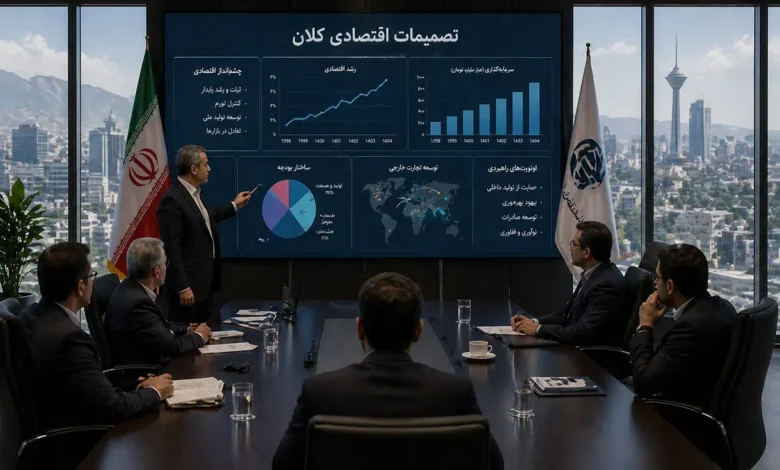
Al Jazeera’s recent report on Iran’s shift toward essential goods offers an important window into how economic priorities can change under uncertainty. The report, published on April 26, 2026, describes how Iran has placed greater emphasis on basic goods, food security, medicine, and strategic reserves during a period of regional and economic pressure.
This article is not a reproduction of the Al Jazeera report. Rather, it is a business and economic reading of the report from the perspective of market stability, supply-chain resilience, and policy prioritization. The original article can be read here:
Al Jazeera report on Iran’s economic focus

The key point is that Iran’s shift should not be viewed only as a short-term reaction. It can also be understood as a strategic rebalancing: when uncertainty rises, governments and markets naturally move from expansion-oriented behavior toward protection of essential flows.
 .
.
In uncertain economic conditions, the most important question is not only “how much growth is possible?” but “which flows must never stop?” Food, medicine, logistics, and foreign-currency allocation become more important than ordinary consumption patterns.
What Al Jazeera Highlights About Iran’s Shift
The Al Jazeera report focuses on several major themes: the prioritization of essential goods, the use of preferential exchange rates for selected imports, the role of strategic reserves, and the pressure felt by households and businesses. These themes show that Iran’s shift is mainly about maintaining availability of critical goods.
For international readers, this is an important signal. Iran’s economy is not simply reacting to pressure; it is reorganizing around necessity. In such moments, essential goods become the center of economic planning, while discretionary spending and non-essential imports naturally lose priority.
Why Essential Goods Become the Core of Economic Policy
In normal market conditions, governments may focus on growth, investment, industrial expansion, and trade diversification. But during uncertainty, the hierarchy changes. The first priority becomes access to goods that protect social stability and basic living standards.
This is why Iran’s shift toward essential goods should be read as a stabilizing policy direction. Wheat, medicine, medical equipment, baby formula, rice, meat, and similar categories are not ordinary commodities. They are social and economic anchors.
A country under pressure does not measure resilience only by GDP growth. It measures resilience by continuity: continuity of food supply, continuity of medicine, continuity of logistics, and continuity of household access to basic goods.
Currency Policy and the Cost of Stability
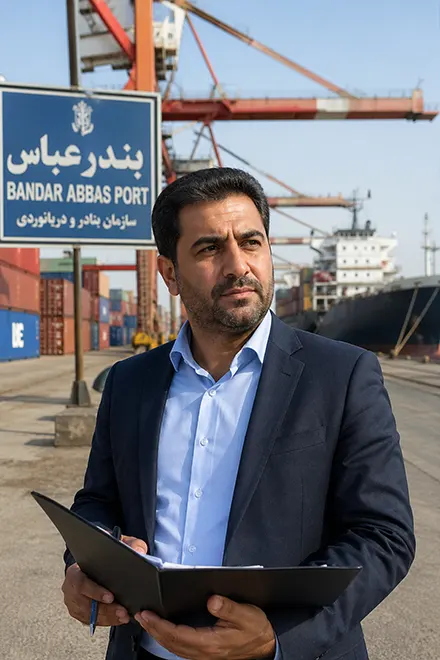
One of the central issues in the Al Jazeera report is the discussion of preferential exchange rates for importing essential items. This point is important because currency policy is never just a technical matter. It directly affects prices, import flows, and household purchasing power.
From a business perspective, Iran’s shift shows a familiar trade-off. A unified exchange-rate policy may improve transparency in normal conditions, but during periods of pressure, targeted support for essential imports may be used to reduce the burden on households.
This does not mean that preferential rates are free of challenges. Any subsidized currency mechanism requires strong oversight, transparent allocation, and careful monitoring. However, in times of uncertainty, governments often accept administrative complexity in order to protect strategic goods.
The real issue is not whether support exists, but whether support reaches the right goods, the right importers, and ultimately the final consumer. In essential-goods policy, execution is as important as the decision itself.
Strategic Reserves and Supply-Chain Thinking
Another important message in the report is the emphasis on strategic reserves. This is a key concept for anyone studying Iran’s economy. Strategic reserves are not only about storage; they are about time. They give policymakers time to manage shocks, negotiate supply routes, and reduce panic in the market.
For importers, exporters, manufacturers, and logistics companies, Iran’s shift means that supply-chain reliability will become more valuable than speed alone. The strongest companies will not necessarily be those that move fastest, but those that can continue operating when routes, prices, and regulations change.
What This Means for Businesses Watching Iran
For foreign companies and regional traders, the Al Jazeera report offers a useful signal: demand in Iran may become more concentrated around essential sectors. Food inputs, pharmaceuticals, medical supplies, packaging, cold-chain logistics, agricultural commodities, and industrial maintenance may remain strategically important.
At the same time, companies dealing with non-essential consumer goods may face weaker demand, more cautious buyers, and more complex import conditions. This is a natural result of Iran’s shift from consumption diversity toward essential prioritization.
Business Reading:
- Essential goods may receive higher policy attention.
- Import routes and payment mechanisms may become more strategic.
- Household demand may move toward necessity-based purchases.
- Companies with strong logistics networks may gain an advantage.
- Market entry requires more caution, verification, and local knowledge.
Reading the Report Without Overstatement
A careful reading of the Al Jazeera article is necessary. The report describes pressure, uncertainty, and policy adjustment, but it should not be interpreted as a simple collapse narrative. Economies under pressure often adapt by changing priorities.
In this sense, Iran’s shift is better understood as a defensive economic adjustment. It reflects the importance of protecting essential consumption, maintaining reserves, and managing public expectations.
For readers outside Iran, this distinction matters. Iran’s market cannot be understood only through headlines. It must be understood through the interaction of policy, sanctions, logistics, domestic production, regional trade, and household behavior.
From Expansion to Protection
The most important conclusion from this report is that uncertainty changes the meaning of economic success. In stable times, success may mean growth, investment, and new market expansion. In unstable times, success means protecting the core.
That is the essence of Iran’s shift. The economy is not only asking which sectors can grow. It is asking which sectors must be protected first.
In crisis-sensitive markets, the winners are not always the most aggressive players. They are the most prepared players. They understand supply routes, currency risk, inventory planning, and government priorities before entering the market.
Conclusion
Al Jazeera’s report provides a useful external view of Iran’s shift toward essential goods. But the deeper business lesson is broader: uncertainty forces economies to prioritize resilience over expansion.
For policymakers, this means protecting essential flows. For businesses, it means understanding which sectors remain necessary even when consumer behavior changes. For international observers, it means reading Iran’s economy through a more practical lens: not only pressure, but adaptation.
As Iran continues to manage a complex economic environment, the focus on essential goods may remain one of the most important indicators of market direction.
FAQ
What does Iran’s shift to essential goods mean?
It means that economic policy and market behavior are moving toward prioritizing basic goods such as food, medicine, medical equipment, and strategic imports.
Why is Al Jazeera’s report important?
The report provides an external media perspective on Iran’s changing economic priorities and highlights how uncertainty affects household behavior, imports, currency policy, and strategic reserves.
Is Iran’s shift only a short-term reaction?
Not necessarily. While it is linked to current uncertainty, it also reflects a broader principle of crisis management: protecting essential supply chains before expanding non-essential sectors.
What sectors may become more important?
Food supply, medicine, medical equipment, agricultural inputs, logistics, packaging, cold-chain distribution, and essential industrial maintenance may receive greater attention.
What is the main business lesson?
The main lesson is that resilience matters. In uncertain markets, companies need reliable suppliers, verified logistics routes, currency-risk planning, and a clear understanding of policy priorities.