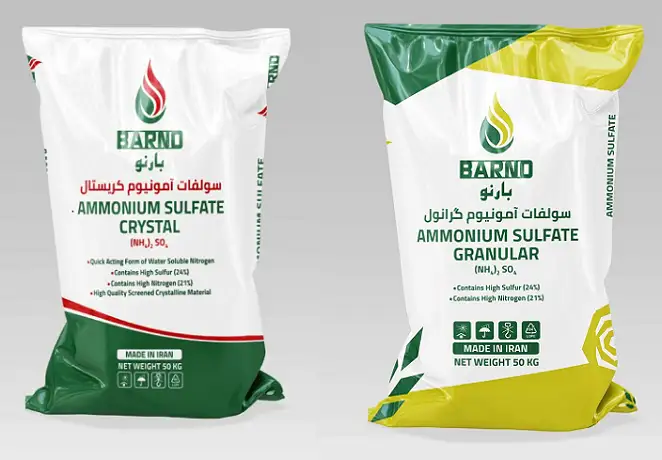
Ten years ago, a bag of ammonium sulfate produced in manufactory rarely traveled far from the farm it was meant for. It moved by truck, not by container ship, and its journey ended at a domestic distributor, not a foreign port. That has changed. Somewhere between a production plant and a customs office, Iranian-made fertilizer started crossing borders, and Barno’s name started showing up on the paperwork.
Barno began as a domestic producer of ammonium sulfate, manufacturing the compound for agricultural sector. The country has long grown the raw materials and industrial base to support fertilizer production, and Barno built its early identity around supplying that internal demand, mills, distributors, and farms that needed a steady, dependable source of ammonium sulfate without relying on imports. In those years, the company’s reputation was a quiet, local one: an ammonium sulfate manufacturer known mainly to buyers who were already inside the country.
The Demand for Nitrogen Based Fertilizers
That began to shift as neighboring markets started looking toward for the same product. Demand for nitrogen-sulfur fertilizers was rising across the region, and production capacity meant it could offer both volume and consistency to buyers outside its own borders. Barno moved with that shift, transitioning from a domestic manufacturer into an ammonium sulfate supplier buyers abroad could actually reach, building the export relationships, documentation, and logistics that turn a domestic producer into an exporter. It’s a transition many manufacturers attempt and few complete: production is one discipline, but reliably fulfilling international orders is another.



The map that resulted tells its own story. Iraq, sharing a long land border and an established trade corridor with Iran, became one of the earliest and steadiest destinations, a market where buyers now regularly import ammonium sulfate to Iraq directly from Iranian suppliers rather than sourcing it from farther afield. From there, Barno’s reach extended into Central Asia, where agricultural demand for sulfur-based fertilizers has grown alongside expanding farmland. Further east, India’s vast fertilizer market opened another route, while shipments to Oman reflected steady Persain Gulf-region demand. More recently, orders reaching parts of Europe have marked a further stage in that expansion, a signal that a producer’s product can meet requirements well outside its home region.
 .
.
None of this happened as a single announcement or a marketing campaign. It happened shipment by shipment, contract by contract, as buyers in one country told buyers in another where they were sourcing their fertilizer. That is, in many ways, how export reputations are actually built, not declared, but accumulated.
Barno’s story so far is really two stories folded into one: a manufacturer that first proved itself at home, and an exporter that is still proving itself abroad, one market at a time. The company’s next chapter will likely be written the same way its first one was, not through claims of scale, but through the next country added to the map, and the next buyer who decides a rliable supplier is the one they can count on.