Hing Price in Iran: Iranian Asafoetida Prices, Grades and Export Guide
Current Hing Prices in Iran and Key Factors Affecting the Market

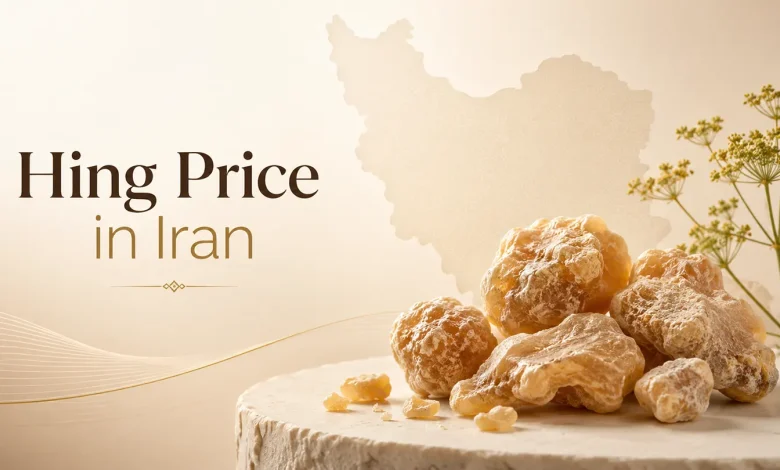
The hing price in Iran cannot be represented by a single fixed figure. Iranian asafoetida is traded in several forms and quality levels, and quotations may differ according to botanical origin, resin purity, aroma intensity, moisture content, physical form, order volume, packaging, and delivery terms. Raw tears and high-resin lumps usually belong to a different price category from commercial powder or compounded hing.(Hing in Persian: آنغوزه)
For international buyers, the most useful price comparison is therefore based on a clearly defined specification rather than a general price per kilogram. A reliable quotation should identify the product form, grade, net weight, minimum order quantity, packaging type, Incoterm, quotation date, and whether laboratory analysis is included.
As of 21 July 2026, indicative Iranian hing prices range from approximately $205 to $520 per kilogram for commercial to premium raw resin, while compounded hing powder may be considerably cheaper. Prices vary according to purity, resin content, physical form, order volume, packaging and delivery terms. These figures represent market observations rather than fixed Iranian export quotations.
Indicative Iranian Hing Price Range — 21 July 2026
| Hing category | Indicative market price in USD/kg | Evidence and pricing basis |
|---|---|---|
| Compounded hing powder | $16–$73 | Broader importer and processor market reference for products blended with edible carriers such as flour, starch or gum |
| Genuine Iranian hing | Approximately $310 | Based on a March 2026 market report stating that genuine Iranian hing was trading near INR 30,000 per kg |
| Raw asafoetida resin | $310–$830 | Broader raw-resin market benchmark depending on purity; not necessarily a direct Iranian farm-gate, EXW or FOB quotation |
| Direct Iranian bulk or industrial orders | Quotation required | Final price depends on product form, purity, laboratory results, quantity, packaging, destination and Incoterm |
Price reference date: 21 July 2026.
The reported price for genuine Iranian hing is based on a March 2026 market report
stating that genuine Iranian hing was trading near INR 30,000 per kilogram. Broader raw-resin and compounded-hing ranges are based on a January 2026 industry pricing reference.
Market data note: Prices were converted into U.S. dollars using the exchange rate reviewed on 21 July 2026. The figures represent indicative importer and processor market observations rather than binding Iranian supplier offers. Freight, insurance, customs costs, testing, packaging, taxes and distributor margins may be included in some publicly reported prices.
Buyers should request a current quotation that identifies the product form, declared asafoetida concentration, batch quality, net weight, minimum order quantity, packaging, laboratory documentation, named delivery point and applicable Incoterm.
 .
.
Prices should be dated because harvest conditions, seasonal availability, exchange-rate movements, transport costs, and buyer specifications can change the final offer. Environmental conditions may also influence resin output and essential-oil content. A study of nine Ferula assa-foetida populations in Iran’s Kerman Province reported measurable differences in resin yield and volatile-oil content among populations, demonstrating why products from different locations or harvests should not automatically be treated as commercially identical.
For an accurate offer, buyers should request a quotation based on the required quantity, product form, destination, packaging, and quality documentation.
What Is Hing and How Is Iranian Asafoetida Produced?
Hing is the common commercial name for asafoetida, a strongly aromatic plant material obtained from species of the genus Ferula. It is more precisely described as an oleo-gum-resin, meaning that it naturally contains resinous material, gum, and volatile oil rather than being an ordinary dried spice.
The product is collected by cutting or tapping the upper root or rhizome of a mature Ferula plant. A milky exudate emerges from the cut surface and gradually thickens after exposure to air. Repeated collection produces the raw asafoetida resin that can later be cleaned, graded, packed as lumps or tears, ground into powder, or processed into compounded hing.
The Food and Agriculture Organization describes asafoetida as an oleoresin exudate obtained from certain Ferula species occurring in Iran, Afghanistan, Turkey, and surrounding areas. It also identifies root tapping as the traditional method used to collect the exudate.
Asafoetida’s characteristic odor is primarily associated with volatile sulfur-containing compounds. Scientific reviews also describe coumarins, sesquiterpenes, phenolic compounds, and other phytochemicals in Ferula species. These compounds help explain the product’s distinctive sensory profile and its long history of culinary and traditional use. (Traditional Uses, Phytochemistry and Pharmacology of Asafoetida)
Botanical identity matters commercially. Products sold under the broad name “hing” may originate from different Ferula species, regions, or processing systems. Buyers seeking consistent aroma, composition, and performance should therefore ask for information about origin, processing, and laboratory testing instead of relying only on the trade name.
Main Asafoetida-Producing Regions in Iran
Iran is part of the natural geographical range of asafoetida-producing Ferula species. These drought-adapted plants are associated mainly with arid and semi-arid landscapes, where local climate, altitude, rainfall, soil characteristics, and plant population can influence resin production and composition.
Commercial and research activity related to asafoetida has been reported in several Iranian regions, particularly in the east, southeast, and parts of the country’s central and southern rangelands. South Khorasan and Kerman are among the regions most frequently discussed in publications concerning Iranian asafoetida production, harvesting, resin yield, and economic importance.
Research conducted on populations from Kerman Province found that resin yield varied among collection areas and showed a positive relationship with precipitation. Essential-oil content also differed among the studied populations. Another study examining Iranian accessions reported geographical variation in the essential-oil yield and chemical composition of F. assa-foetida.
Research on asafoetida samples collected from eastern and southern Iran has also identified differences in volatile sulfur profiles. These findings indicate that geographical origin and botanical source can influence aroma and chemical characteristics—two factors that may ultimately affect grading, buyer preference, and price.

For commercial transactions, the name of a province alone should not be treated as proof of quality. Traceability is stronger when regional origin is supported by batch records, supplier documentation, representative samples, and analytical results.
Harvesting and Processing Iranian Hing
Asafoetida harvesting is a specialized and labor-intensive process. Once a suitable plant reaches maturity, the soil around the upper root is removed and part of the root or crown is exposed. The collector makes a controlled cut, after which the plant releases a latex-like exudate. The material is allowed to thicken before being collected, and the cutting process may be repeated over a defined harvesting period.
This method means that final yield depends not only on plant size but also on environmental conditions, plant population, timing, tapping technique, and the duration of exploitation. Iranian field research has reported differences in resin productivity and essential-oil composition during the exploitation period, reinforcing the importance of controlled harvesting and batch separation.
After collection, the resin may pass through several commercial stages:
- Removal of visible soil, plant fragments, and foreign matter
- Sorting according to appearance, texture, color, and cleanliness
- Separation into tears, lumps, mass, or lower-grade material
- Controlled storage to limit moisture uptake and contamination
- Grinding or blending when a powdered product is required
- Packaging according to food, industrial, or export specifications
Raw asafoetida is naturally variable. Its intense aroma is linked to volatile sulfur compounds, while its resin and gum fractions influence texture and processing behavior. Scientific analysis of Iranian Ferula asafoetida materials has confirmed that the gum and other plant fractions contain chemically diverse constituents with different functional properties.
Sustainable harvesting is also an important supply-chain consideration. Excessive or poorly managed root tapping may damage natural plant populations and reduce future availability. Buyers interested in long-term sourcing should therefore evaluate whether suppliers can provide information about collection areas, harvesting practices, and traceability.
Types of Iranian Hing Available in the Market
Iranian hing can be supplied in different physical forms. These forms should not be treated as interchangeable because each may have a different level of processing, purity, consistency, application, and price.
Raw Asafoetida Resin
Raw resin is the collected oleo-gum-resin before extensive industrial processing. Depending on the batch, it may contain natural tears, irregular lumps, softer resinous masses, or varying amounts of plant and mineral matter. Raw resin is generally purchased by processors, spice manufacturers, extract producers, and buyers capable of completing their own cleaning and standardization. (Gums, Resins and Latexes of Plant Origin: Asafoetida)
Hing Lumps and Tears
Tears are comparatively discrete pieces formed as the exudate solidifies, while lumps may consist of larger or aggregated resinous material. Their commercial value depends on cleanliness, botanical origin, aroma, color, resin characteristics, and the presence of foreign matter.
The words “tear” and “lump” describe physical presentation rather than a universally guaranteed grade. A sample, detailed specification, and certificate of analysis remain necessary when comparing offers.
Asafoetida Powder
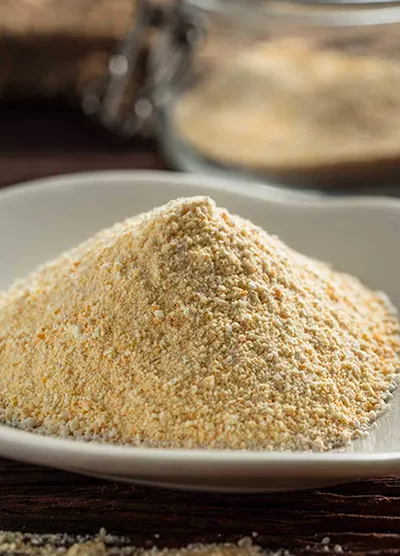
Asafoetida powder is produced by grinding resin, but products marketed as hing powder may have very different formulations. Some consist mainly of ground resin, whereas others are compounded with edible carriers such as flour, starch, or gum to improve handling and produce a more uniform seasoning.
Buyers should therefore distinguish between:
- Pure or high-resin asafoetida powder
- Standardized commercial hing powder
- Compounded hing containing declared carriers
- Industrial powder produced for extraction or manufacturing
A scientific study on asafoetida formulations noted that processing the gum into a stable powder can improve handling and reduce some of the practical difficulties created by its strong odor and sticky physical characteristics.
Compounded Hing
Compounded hing combines asafoetida with one or more food-grade carriers. It is commonly intended for culinary use because it is easier to dose, distribute, and package than sticky raw resin. Its price per kilogram may be lower than high-purity resin, but direct price comparisons can be misleading unless the percentage of asafoetida and the identity of all added ingredients are disclosed.
When requesting a quotation, buyers should specify whether they need natural resin, tears, lumps, pure powder, or compounded hing. This distinction is essential for comparing Iranian suppliers on an equivalent basis.
Iranian Hing Grades and Quality Standards
Iranian hing does not have one universally applied international grading system. In practice, suppliers and buyers classify asafoetida according to a combination of physical appearance, botanical origin, cleanliness, aroma, resin content, volatile-oil content, moisture, foreign matter, and intended application.
This means that terms such as “premium,” “Grade A,” or “export quality” should not be accepted as complete specifications on their own. Two suppliers may use the same grade name for products with significantly different purity, composition, or processing histories. Buyers comparing the hing price in Iran should therefore request measurable quality indicators alongside every commercial grade.
According to the Food and Agriculture Organization, natural asafoetida generally contains approximately 40–65% resin, around 25% gum, and a variable proportion of essential oil. Fresh commercial material commonly contains about 7–9% essential oil, although the percentage may differ according to botanical and geographical origin. The same FAO publication notes that commercial samples may contain fragments of roots, sand, other extraneous matter, or added inert diluents.
A practical specification for an Iranian hing order may include:
- Product form and botanical source
- Country and region of origin
- Resin or alcohol-soluble extract content
- Volatile-oil content
- Moisture percentage
- Total ash and acid-insoluble ash
- Foreign organic and mineral matter
- Microbiological limits
- Heavy-metal and pesticide-residue limits
- Added carriers or processing ingredients
The applicable standard depends on the importing country and the product’s intended use. Food manufacturers, spice blenders, extract producers, pharmaceutical companies, and retail distributors may require different analytical and regulatory specifications.
Premium, Commercial and Industrial Grades
Although grade names vary between suppliers, Iranian asafoetida can be divided into three broad commercial categories for easier comparison.
Premium Grade
Premium-grade hing generally consists of carefully selected tears or clean resinous lumps with a strong characteristic aroma, relatively uniform appearance, limited foreign material, and a high proportion of natural oleo-gum-resin.
This category is commonly requested by specialist spice importers, extract producers, traditional-product manufacturers, and buyers seeking strong sensory performance. Premium-grade material is usually more expensive because selection, cleaning, sorting, traceability, and quality control add to the final cost.
However, visual appearance alone cannot confirm premium quality. A clean-looking sample may still differ in volatile-oil content, resin composition, botanical identity, or moisture. Premium claims should therefore be supported by representative sampling and laboratory analysis.
Commercial Grade
Commercial-grade asafoetida is suitable for many mainstream food-processing and wholesale applications. It may include less uniform lumps, aggregated tears, or cleaned mass asafoetida with acceptable aroma and composition but a broader range of color and texture.
Commercial-grade hing can offer a more practical balance between price, performance, and availability. For many bulk buyers, it is more economical than selected tears, particularly when the material will later be ground, blended, extracted, or standardized.
The specification should still define maximum foreign matter, moisture, ash, and any permitted processing ingredients. Without those details, a lower quotation may simply reflect a lower concentration of genuine asafoetida.
Industrial Grade
Industrial-grade material is generally intended for further processing rather than direct retail sale. It may be purchased for extraction, flavor formulation, compounded hing production, or other manufacturing uses.
This grade may contain irregular pieces, a wider color range, or material requiring additional cleaning and standardization. Its value depends on processing yield and usable chemical content rather than appearance alone.
For industrial orders, buyers should pay particular attention to extractable resin, volatile-oil yield, foreign matter, moisture, batch consistency, and processing losses. The cheapest price per kilogram is not necessarily the lowest effective production cost.
Purity, Color, Aroma and Resin Content
The commercial value of hing depends on several connected quality characteristics. No single attribute should be used independently to determine grade or price.
Purity
Purity refers to the proportion of genuine asafoetida relative to soil, stones, plant fragments, foreign resins, starches, flours, gums, mineral materials, and other undeclared substances.
Natural raw asafoetida may contain some material introduced during collection because the resin is harvested close to the soil. Nevertheless, excessive extraneous matter reduces usable yield and should be reflected in the price.
Published research has identified adulteration as a recurring quality concern in commercial asafoetida. Reported adulterants include chalk, colophony, other oleo-gum-resins, and undeclared fillers. Analytical approaches such as chromatography and chemical fingerprinting can help distinguish authentic material from substituted or diluted products.
Color
Fresh asafoetida tears may appear pale, yellowish, or greyish-white internally and can gradually develop darker yellow, orange, reddish-brown, or brown tones after exposure to air and storage.
Color can provide useful information about age, oxidation, collection method, and processing, but it is not a universal measure of purity. Different botanical populations and storage conditions may naturally produce different appearances.
Therefore, statements such as “lighter is always better” or “dark hing is necessarily low grade” are oversimplifications. Color should be evaluated together with aroma, cleanliness, texture, laboratory results, and product history.
Aroma
A strong sulfurous aroma is one of asafoetida’s most recognizable characteristics. Its odor is primarily associated with volatile sulfur-containing compounds in the essential-oil fraction.
Aroma intensity can vary because of botanical source, geographic origin, age, storage, processing, and essential-oil loss. Improperly sealed packaging or prolonged exposure to heat and air may weaken the volatile profile.
Scientific studies of Iranian asafoetida populations have reported geographical differences in essential-oil content and chemical composition. As a result, two authentic Iranian batches may have noticeably different aroma profiles without either necessarily being adulterated.
Resin Content
Resin is one of the major natural fractions of asafoetida and is an important commercial indicator. Higher resin or extractive content may increase the value of material intended for concentrated flavoring, extraction, or pharmaceutical processing.
The FAO reports a broad natural resin range of approximately 40–65%, illustrating why a buyer cannot assume that every raw batch has the same composition.
Resin content should be interpreted alongside gum, volatile oil, moisture, ash, and foreign matter. A high percentage reported without a clear analytical method, laboratory identity, and sampling procedure has limited commercial value.
Laboratory Testing and Quality Documentation
Laboratory testing provides a more reliable basis for comparing Iranian asafoetida than trade names, photographs, or sensory descriptions alone.
The exact testing program should be selected according to the intended application and destination market. A typical Certificate of Analysis may report:
- Moisture or loss on drying
- Total ash
- Acid-insoluble ash
- Alcohol-soluble or resinous extract
- Volatile-oil content
- Foreign matter
- Microbiological results
- Heavy metals
- Pesticide residues
- Aflatoxins or other relevant contaminants
- Botanical or chemical identity
Moisture testing is important because excess water can distort the apparent weight, affect texture, encourage deterioration, and reduce storage stability. Total ash gives an indication of the total inorganic residue remaining after incineration, while acid-insoluble ash can help reveal contamination with soil, sand, or siliceous material.
Chromatographic and spectroscopic methods may also support identity and authenticity testing. High-performance thin-layer chromatography, high-performance liquid chromatography, gas chromatography, and infrared spectroscopy can be used to examine characteristic compounds or chemical profiles.
A published analytical study used HPTLC and HPLC to examine umbelliferone-related profiles in marketed hing samples and highlighted the need for improved standardization because conventional specifications may not fully identify substitution or adulteration. Instrument-based methods are especially useful when adulterants cannot be detected reliably through visual inspection or simple physical tests.
For commercial reliability, buyers should confirm that:
- The tested sample represents the actual shipment batch.
- The Certificate of Analysis includes a batch number and testing date.
- The laboratory and analytical methods are identified.
- Results are reported with units and acceptance limits.
- Testing requirements are agreed upon before production or shipment.
Where regulatory compliance is important, an independent accredited laboratory may be preferable to a supplier’s internal testing facility.
Iranian Hing Price by Type and Grade
The hing price in Iran varies substantially according to product type and grade. Raw resin, selected tears, commercial lumps, pure powder, compounded hing, and industrial material should not be compared as though they were the same commodity.
Premium Tears and Selected Lumps
Selected tears and visually clean lumps usually command the highest price per kilogram. Their price reflects natural availability, manual selection, cleanliness, aroma, consistency, and lower levels of extraneous matter.
Buyers may pay an additional premium for traceable regional origin, laboratory documentation, uniform batch characteristics, or customized export packaging.
Raw Asafoetida Resin
Raw resin prices depend heavily on usable yield. A cheaper batch containing significant soil, root material, excess moisture, or low-resin fractions may ultimately cost more after cleaning and processing.
For meaningful comparison, buyers should calculate the cost per kilogram of usable material rather than relying only on the gross purchase price.
Pure or High-Resin Powder
Powder produced mainly from natural resin is generally priced according to asafoetida concentration, aroma, particle size, moisture, and processing quality.
Grinding can increase processing costs, but powdered material may also be easier to standardize, sample, blend, and use in manufacturing. Buyers should verify that anti-caking agents, carriers, starches, or flours have not been added unless they are explicitly declared.
Compounded Hing
Compounded hing is normally less expensive per kilogram than high-purity natural resin because it contains edible carrier ingredients. Its commercial value depends on the declared proportion of asafoetida, carrier type, sensory strength, consistency, and compliance with the buyer’s food regulations.
A direct price comparison between compounded hing and natural resin is misleading unless the active asafoetida concentration is known.
Industrial Material
Industrial-grade hing may have the lowest nominal price, but further cleaning, extraction, filtration, or standardization can add significant costs. Manufacturers should evaluate:
- Processing recovery rate
- Labor and cleaning requirements
- Extractable resin yield
- Essential-oil retention
- Waste percentage
- Batch-to-batch consistency
The following structure is suitable for the page’s price table:
| Iranian hing category | Key specification | Price basis |
|---|---|---|
| Selected premium tears | Cleanliness, uniformity and laboratory results | USD per kg |
| Premium resin lumps | Resin content, aroma and foreign matter | USD per kg |
| Commercial raw resin | Usable yield and order volume | USD per kg |
| High-resin powder | Asafoetida concentration and particle size | USD per kg |
| Compounded hing | Declared hing percentage and carrier | USD per kg |
| Industrial material | Extraction yield and processing requirements | USD per kg |
Each published quotation should include an update date, minimum order quantity, packaging basis, Incoterm, and price-validity period. Without these details, the figures may attract search traffic but provide little value to a serious importer.
What Determines the Price of Hing in Iran?
The hing price in Iran is influenced by a combination of product quality, physical form, harvest conditions, processing requirements, order size, packaging, exchange rates, and delivery terms. Asafoetida is not a standardized commodity with one universal price per kilogram. A quotation for compounded hing powder cannot be compared directly with a quotation for pure raw resin or selected tears.
The most important pricing distinction is between natural asafoetida resin and products containing carriers. Raw or high-purity resin has a much higher concentration of genuine asafoetida, while compounded hing may contain wheat flour, rice flour, starch, gum, or other declared edible ingredients. This difference explains why two products sold under the same general name can have dramatically different prices.
Market observations in 2026 show this gap clearly. One Indian industry source places unprocessed raw resin at approximately ₹30,000–₹80,000 per kilogram, while compounded hing is quoted at approximately ₹1,500–₹7,000 per kilogram. A separate listing for Iranian raw hing shows ₹21,000 per kilogram, while another supplier lists Iranian resin at approximately ₹20,000 per kilogram.
These figures are indicative market ranges, not fixed Iranian farm-gate or FOB prices. Publicly visible prices are often quoted by importers, processors, wholesalers, or B2B sellers after the product has entered another market. Freight, insurance, customs expenses, processing margins, local taxes, testing, and distribution costs may already be included in some offers.
The ranges should therefore be used for market orientation rather than as an automatic supplier quotation. An actual offer must specify whether the price is EXW, FOB, CFR, CIF, DAP, or DDP.
A 2026 report on India’s hing market stated that genuine Iranian hing was trading at close to ₹30,000 per kilogram during a period of restricted supply. The same report noted that import disruption had caused prices to increase by approximately 5–15%.
Product Grade and Purity
Grade and purity are among the strongest determinants of Iranian hing prices. Selected tears and cleaner resin generally command higher prices because they require additional sorting, cleaning, traceability, and quality control.
Natural raw resin should not be compared directly with compounded powder containing flour, starch, gum, or other carriers. Buyers should compare products using declared asafoetida concentration, resin content, moisture, foreign matter, laboratory results, and usable processing yield.
Terms such as “premium,” “Grade A,” or “export quality” have limited value unless they are supported by a written specification and representative batch analysis.
Harvest Season and Supply Conditions
Asafoetida supply depends heavily on biological and environmental conditions because much of the resin is collected from wild or semi-wild Ferula populations. Rainfall, temperature, plant maturity, harvesting intensity, tapping methods, and the condition of natural rangelands can all influence the amount of resin available in a particular season.
Research on Iranian asafoetida populations has reported that resin productivity can differ between locations and may be associated with precipitation and local environmental conditions. Geographical populations may also differ in essential-oil yield and chemical profile.
These variations have two effects on the market:
- The total quantity available for sale can change between harvests.
- The sensory and chemical quality of different batches may not be identical.
Supply-chain disruption can create additional volatility. In March 2026, traders in India reported that disruption to imports from Iran and Afghanistan had pushed hing prices approximately 5–15% higher. Genuine Iranian hing was reported at close to ₹30,000 per kilogram during this period.
Seasonal price changes should not automatically be interpreted as changes in product quality. A higher price may reflect limited availability, transport disruption, geopolitical risk, or inventory shortages rather than improved purity.
For a page targeting hing price in Iran, the published price table should therefore include:
- The date of the latest update
- The harvest season, when known
- The number of supplier quotations reviewed
- The product specification used for comparison
- A note explaining major supply disruptions
Updating these details regularly is more valuable than repeatedly changing the wording of the article for SEO purposes.
Exchange Rates and Export Costs
Exchange rates can affect the U.S.-dollar value of Iranian hing quotations, particularly when reference prices are collected from different markets. Freight, insurance, customs clearance, laboratory testing, packaging, and banking costs may also change the final landed price.
Buyers should therefore compare quotations issued under the same Incoterm and delivery destination. A low EXW price may ultimately cost more than a higher FOB, CPT, or CIF quotation once transport and export-related expenses are included.
A complete quotation should state the price per kilogram, minimum order quantity, packaging, named delivery point, Incoterm, quotation validity, and any included testing or documentation.
How Iranian Hing Prices Compare with Other Origins
The price of Iranian hing should be compared with products from other origins only when the botanical source, physical form, purity, processing level, and delivery terms are reasonably similar. A quotation for raw Iranian oleo-gum-resin cannot be compared directly with the retail price of compounded hing manufactured in India.
Iran and Afghanistan are historically important sources of natural asafoetida resin, while India is both a major consumption market and an important processing and compounding center. In commercial practice, the word “Indian hing” may refer to a product blended, standardized, or packaged in India rather than resin harvested from plants grown there.
The FAO describes asafoetida as an oleo-gum-resin obtained from certain Ferula species and notes that commercial material can vary considerably in composition and quality. It may be sold as separate tears, agglomerated masses, or paste-like material and may contain root fragments, sand, other foreign matter, or added diluents. This natural and commercial variability makes specification-based comparison more reliable than country-of-origin labels alone.
Iranian Hing vs Afghan Hing
Iranian and Afghan asafoetida can both be supplied as raw resin, tears, lumps, or material intended for further processing. The commercial value of either origin depends on characteristics such as:
- Aroma intensity and volatile-oil profile
- Resin and gum composition
- Cleanliness and foreign-matter content
- Moisture and storage condition
- Botanical identity
- Harvest location and season
- Batch consistency
- Laboratory documentation
Neither origin should automatically be described as superior. A selected Afghan resin may cost more than a commercial Iranian batch, while premium Iranian tears may command a higher price than irregular Afghan mass resin.
For a fair comparison, buyers should obtain representative samples and request quotations based on the same specification, quantity, packaging, Incoterm, and testing requirements.
Iranian Hing vs Indian Asafoetida Products
The comparison between Iranian and Indian hing requires particular care because many products sold in India are compounded formulations. Compounded hing may combine natural asafoetida with edible carriers such as flour, starch, or gum to improve dosing, handling, and consistency.
As a result, an Indian compounded product may have a substantially lower price per kilogram than Iranian raw resin. This does not necessarily mean that the Indian offer is more economical. The buyer must compare the actual asafoetida concentration and intended application.
For example, food manufacturers purchasing a ready-to-use seasoning may prefer a standardized compounded product. Extract producers or spice processors, by contrast, may need raw resin with higher extractive or volatile-oil content.
The most meaningful comparison is therefore based on cost per unit of usable asafoetida, not simply the price printed on the invoice.
Packaging, Minimum Order Quantity and Samples
Packaging influences the final Iranian hing price because raw asafoetida has a powerful aroma and may soften or become sticky when exposed to unsuitable temperatures or moisture. Appropriate packaging helps control odor transfer, contamination, moisture absorption, and product loss.
Common bulk packaging options include:
- Multi-layer food-grade bags
- Sealed polyethylene inner liners
- Lined export cartons
- Food-grade plastic or metal drums
- Vacuum-sealed sample packs
- Customized retail containers
The appropriate format depends on whether the product consists of tears, lumps, raw mass, pure powder, or compounded hing.
Bulk resin should normally be separated from products that can absorb strong odors. The inner packaging should be securely sealed, while the outer package should be strong enough to withstand handling, stacking, and international transport.
Minimum order quantities vary by supplier and product type. Typical commercial arrangements may include:
| Order type | Indicative quantity |
|---|---|
| Evaluation sample | 100 g–1 kg |
| Commercial sample order | 1–10 kg |
| Small wholesale order | 25–100 kg |
| Standard bulk order | 100–500 kg |
| Industrial shipment | 500 kg or more |
These quantities are indicative rather than universal. Selected tears or specialty grades may be available in smaller quantities, while customized powder or private-label production may require a larger minimum order.

Samples should be taken from the actual commercial batch whenever possible. A supplier should also clarify whether the sample cost, laboratory testing, courier fee, and export documentation will be credited against a later bulk order.
Before approving a sample, the buyer should evaluate:
- Appearance and cleanliness
- Aroma and sensory strength
- Texture and moisture
- Packaging integrity
- Laboratory results
- Performance in the intended application
- Consistency with the written specification
A visually attractive sample is not sufficient if the final shipment may come from a different batch. The purchase agreement should therefore connect the approved sample, specification, and shipment batch.
Exporting Hing from Iran
Exporting asafoetida from Iran requires coordination between the supplier, buyer, freight forwarder, customs representative, laboratory, and relevant authorities. The exact procedure depends on the product form, intended use, destination country, shipment size, and applicable import regulations.
A shipment of raw botanical resin may be treated differently from a processed food ingredient or retail-ready compounded product. Buyers should confirm the destination country’s requirements before production and packaging are finalized.
Required Export Documents
A commercial shipment may require some or all of the following documents:
- Commercial invoice
- Packing list
- Certificate of origin
- Customs declaration
- Transport document
- Certificate of analysis
- Health or sanitary certificate, where required
- Phytosanitary certificate, where applicable
- Insurance certificate, when included in the contract
- Fumigation certificate, where required
- Product specification sheet
- Ingredient declaration for compounded products
Not every document is required for every shipment. The buyer and supplier should create a destination-specific checklist before signing the purchase contract.
The information appearing across the invoice, packing list, certificate of origin, transport document, labels, and customs declaration should be consistent. Differences in product description, gross weight, net weight, batch number, or package count can delay clearance.
For a food-grade product, the buyer may also request microbiological, heavy-metal, pesticide-residue, moisture, ash, or authenticity testing. These tests should be agreed upon before shipment rather than requested after the goods have reached the destination.
Shipping Methods and Delivery Terms
Samples and small commercial orders are usually more suitable for air transport or international courier services, subject to carrier acceptance and applicable regulations. Larger orders may be shipped by air freight, road, sea freight, or a multimodal route.
The shipping method depends on:
- Shipment weight and volume
- Destination
- Delivery urgency
- Odor-control requirements
- Carrier acceptance
- Customs procedures
- Freight cost
- Product stability
- Available trade routes
Every quotation should specify an Incoterm and a named place. Incoterms® 2020 provide standardized rules for allocating key delivery responsibilities, costs, and risks between the buyer and seller. They do not replace the full sales contract or determine product quality, payment terms, or ownership.
Examples of clearer quotation formats include:
- EXW Kerman, Iran — Incoterms® 2020
- FCA Tehran Cargo Terminal — Incoterms® 2020
- CPT Dubai, UAE — Incoterms® 2020
- CIF [named destination port] — Incoterms® 2020
The suitable Incoterm depends on the shipment method and the parties’ ability to arrange transport, insurance, export procedures, and import clearance.
Delivery time should be quoted as an estimate rather than a guarantee unless the supplier has confirmed inventory, documentation, transport capacity, and carrier acceptance.
How to Choose a Reliable Iranian Hing Supplier
A reliable supplier should provide more than a low price. The supplier should be able to define the product, identify the batch, explain the quotation, provide representative samples, and supply the required documentation.
Important evaluation criteria include:
- Traceable origin and batch identification
- Clear product specifications
- Representative samples
- Recent laboratory results
- Transparent disclosure of carriers or additives
- Suitable packaging
- Export experience
- Realistic production and delivery schedules
- Consistent commercial documentation
- Written complaint and replacement procedures
Buyers should be cautious when a supplier uses broad claims such as “100% pure,” “best Iranian hing,” or “Grade A” without measurable supporting criteria.
The FAO reports that commercial asafoetida may be highly variable and can contain foreign matter or inert diluents. It also identifies broad natural ranges for resin, gum, and essential-oil content. This reinforces the need for laboratory-supported purchasing rather than reliance on photographs or marketing descriptions.
A practical supplier-verification process may include:
- Requesting the company’s legal and contact information
- Obtaining a detailed written specification
- Reviewing a representative sample
- Confirming the batch and available quantity
- Checking a recent Certificate of Analysis
- Agreeing on independent inspection where necessary
- Confirming packaging and labeling
- Reviewing the draft export documents
- Using a written sales contract
- Selecting a payment structure proportionate to the commercial risk
The contract should state what happens if the shipment fails the agreed specification. It may define acceptable tolerances, inspection methods, claim deadlines, replacement conditions, and the governing dispute-resolution mechanism.
A lower price does not compensate for inconsistent quality, unsuitable documentation, shipment delays, or an unusable batch.
How to Request an Accurate Hing Price Quote
To receive an accurate quotation, buyers should provide enough information for suppliers to price the same product and service.
A complete request should include:
- Required product form
- Intended application
- Preferred grade or specification
- Required quantity
- Destination country and city
- Packaging requirements
- Required tests and certificates
- Preferred Incoterm
- Sample requirement
- Delivery deadline
- Payment preference
A concise request may be written as follows:
We are seeking a quotation for 200 kg of Iranian raw asafoetida resin for food-processing use. Please quote premium and commercial grades separately, provide the product specification and Certificate of Analysis, and state the minimum order quantity, packaging, lead time, quotation validity, and price under FCA Tehran and CPT Dubai, Incoterms® 2020.
Suppliers should be asked to separate the following amounts where possible:
| Quotation component | Information required |
| Product price | Price per kilogram and total value |
| Packaging | Included or charged separately |
| Testing | Included tests and laboratory |
| Documentation | Included certificates |
| Inland transport | Origin and delivery point |
| International freight | Included or excluded |
| Insurance | Included or excluded |
| Banking charges | Allocation between parties |
| Quotation validity | Expiry date of the offer |
| Production lead time | Estimated preparation period |
The buyer should avoid requesting only “your best hing price.” Without a product specification, order quantity, destination, and Incoterm, the resulting quotations will not be directly comparable.
Frequently Asked Questions About Hing Prices in Iran
What Is the Current Hing Price in Iran?
As of 21 July 2026, indicative market observations suggest that compounded hing may be priced far below natural Iranian resin, while selected or high-purity raw material may reach several hundred U.S. dollars per kilogram.
The exact price depends on purity, product form, grade, order quantity, packaging, testing, and delivery terms. Buyers should refer to the dated price table in this guide and request a current supplier quotation before making a purchasing decision.
Why Do Iranian Hing Prices Vary?
Iranian hing prices vary because asafoetida is naturally and commercially heterogeneous. Differences in botanical population, harvest conditions, resin content, volatile oil, cleanliness, moisture, physical form, processing, packaging, and supply availability can affect value.
A compounded powder containing carriers should not be compared directly with natural tears or raw resin.
What Is the Minimum Order Quantity?
There is no universal minimum order quantity. Samples may be available from approximately 100 grams to one kilogram, while small wholesale orders may begin around 25 kilograms. Customized processing, industrial grades, or private-label packaging may require significantly larger quantities.
The supplier should confirm the MOQ for each product and packaging format.
Can Buyers Request a Sample?
Yes. A representative sample should be requested before a significant bulk order. The buyer should confirm whether the sample comes from the intended shipment batch and whether the same specification will apply to the final order.
Samples may be free, chargeable, or credited against a subsequent purchase. Courier and documentation expenses are often charged separately.
Does the Price Include Shipping?
Not necessarily. The quotation should state its Incoterm and named place. An EXW price generally excludes most transport services, while terms such as CPT or CIF include specified transport-related obligations.
The Incoterm does not by itself define payment terms, product quality, or all contractual obligations. Those matters must be addressed separately in the sales contract.
Request a Quote for Iranian Hing
International buyers can request a customized quotation based on the required product, quantity, destination, packaging, and quality documentation.
To receive a comparable offer, provide:
- Product form: tears, lumps, raw resin, powder, or compounded hing
- Required quantity
- Intended use
- Destination
- Packaging preference
- Required certificates and laboratory tests
- Preferred Incoterm
Request the latest Iranian hing price, product specification, sample availability, and export terms from MyIndustry Consulting Group.
Contact Myindustry Consulting Group (MCG)
Sources
- International Chamber of Commerce (ICC).
Incoterms® 2020. Accessed July 21, 2026. - Food and Agriculture Organization of the United Nations (FAO).
Gums, Resins and Latexes of Plant Origin.
Non-Wood Forest Products Series No. 6. Accessed July 21, 2026. - Iranshahy, M., and Iranshahi, M.
Traditional Uses, Phytochemistry and Pharmacology of Asafoetida (Ferula assa-foetida Oleo-Gum-Resin): A Review.
Journal of Ethnopharmacology, 2011. - Amalraj, A., and Gopi, S.
Biological Activities and Medicinal Properties of Asafoetida: A Review.
Journal of Traditional and Complementary Medicine, 2017. - Mahendra, P., and Bisht, S.
Ferula asafoetida: Traditional Uses and Pharmacological Activity.
Pharmacognosy Reviews, 2012. - Moghaddam, M., Farhadi, N., and colleagues.
Influence of Environmental and Genetic Factors on Resin Yield, Essential Oil Content and Chemical Composition of Ferula assa-foetida L. Populations. Industrial Crops and Products, 2015. - Moghaddam, M., and colleagues.
Variation in Essential Oil Components Among Iranian Ferula assa-foetida L. Accessions
.
Industrial Crops and Products, 2019. - Sefidkon, F., and colleagues.
Comparison of Essential Oil Compositions of Ferula assa-foetida Obtained by Supercritical Carbon Dioxide Extraction and Hydrodistillation Methods. Food Chemistry, 2005. - Comparative phytochemical research indexed by PubMed.
Comparative Phytochemical Analysis of Ferula assa-foetida, Ferula jaeschkeana and Commercial Oleo-Gum Resins Using GC–MS and UHPLC-PDA-QTOF-IMS. Food Research International, 2023.