Saffron Trading Company in Iran: Iranian Saffron Supplier & Exporter
Wholesale Iranian Saffron for Importers and Global Buyers

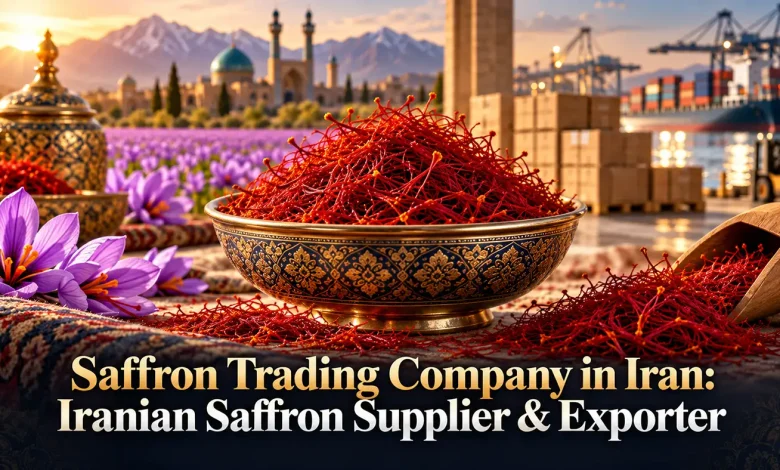
If you are searching for a Saffron Trading Company Iran, you are likely looking for a reliable Iranian supplier that can provide authentic saffron in bulk, verify its quality, offer competitive wholesale pricing, and handle international export requirements. Iran is the world’s primary source of saffron, with major production concentrated in Khorasan.
International buyers can source different grades of Iranian saffron, including Super Negin, Negin, Sargol, and Pushal, for wholesale distribution, food manufacturing, retail packaging, or private-label sales. A reliable saffron supplier should provide laboratory analysis, clear product specifications, traceable origin, suitable export packaging, and the documentation required for international trade.
This guide explains how to find and evaluate Iranian saffron suppliers and exporters, compare saffron grades and wholesale prices, verify quality standards, and manage sourcing, packaging, shipping, and import requirements when buying saffron directly from Iran.
Why Iran Is the Leading Source of Saffron
Iran is the world’s leading source of saffron and the most important origin for international buyers seeking Persian saffron at commercial scale. According to the Food and Agriculture Organization of the United Nations (FAO), Iran produces approximately 85–90% of the world’s saffron, giving the country a central role in the global saffron supply chain.
 .
.
For importers, distributors and food companies, Iran’s importance goes beyond production volume. The country has an established saffron ecosystem covering cultivation, harvesting, stigma separation, drying, sorting, laboratory testing, bulk packaging, private-label production and international export.
Key Sourcing Facts About Iranian Saffron
- Global position: Iran is the world’s dominant saffron-producing country.
- Estimated share of production: approximately 85–90% of global saffron output, according to FAO.
- Main production region: Khorasan, especially Razavi Khorasan and South Khorasan.
- Botanical name: Crocus sativus L.
- Major commercial types: Super Negin, Negin, Sargol and Pushal.
- Main B2B formats: bulk saffron, wholesale packs, retail packaging and private label.
This production scale gives a saffron trading company in Iran access to a deep sourcing network and a wide range of commercial grades. Buyers can source saffron for premium retail, spice distribution, food manufacturing, hospitality, private-label brands and other B2B applications.
However, production origin and export origin should not be confused. Iranian saffron may be exported in bulk and later repacked, branded or redistributed through another country. For buyers specifically looking for Iranian-origin saffron, supplier traceability and documentation are therefore important.
| Factor | What International Buyers Should Know |
|---|---|
| Production origin | Iran is the dominant global producer. |
| Main growing region | Razavi Khorasan and South Khorasan are major production centers. |
| Typical buyers | Importers, distributors, retailers, food manufacturers and private-label brands. |
| Supply formats | Bulk saffron, consumer packs and customized packaging. |
| Quality verification | Commercial grade should be supported by product specifications and laboratory testing. |
Source: Food and Agriculture Organization of the United Nations (FAO).
Khorasan: The Heart of Iranian Saffron
Khorasan is the center of Iran’s saffron industry and one of the most important saffron-producing areas in the world. FAO identifies Razavi Khorasan and South Khorasan as key regions where saffron cultivation is deeply integrated into local agriculture and rural livelihoods.
The region’s arid and semi-arid climate, limited rainfall and long history of saffron cultivation have helped create a specialized supply chain extending from farms and local collection networks to processing facilities, laboratories, packers, wholesalers and exporters.
Why Khorasan Matters to Saffron Buyers
For an international buyer, sourcing from Khorasan can provide access to one of the world’s most established saffron production clusters.
- Large concentration of saffron farms and growers
- Established harvesting and processing expertise
- Access to multiple Iranian saffron grades
- Specialized sorting and packaging operations
- Wholesale and bulk saffron supply networks
- Export-oriented suppliers and trading companies
Historical agricultural data also demonstrates how concentrated Iranian saffron production has traditionally been in this region. Iranian Ministry of Agriculture statistics submitted to the Codex Committee for the 2014–2015 period recorded approximately 218.3 tonnes in Razavi Khorasan and 48 tonnes in South Khorasan. These figures should be treated as historical production data rather than current annual output, but they demonstrate Khorasan’s long-standing importance to the Iranian saffron industry.
Gonabad in Razavi Khorasan also has international agricultural significance. Its Qanat-based Saffron Farming System has been recognized by FAO as a Globally Important Agricultural Heritage System (GIAHS) since 2018. The system combines traditional qanat irrigation with saffron cultivation in a water-scarce environment.
Buyer’s Takeaway: Origin Is Important, but It Is Not Enough
A product described as Khorasan saffron should not automatically be considered high quality. Professional buyers should verify the commercial grade, batch specifications, laboratory analysis, moisture and storage conditions, packaging, traceability and export documentation before placing a bulk order.
Sources: FAO – Iran Saffron Value Chain and FAO – Qanat-based Saffron Farming System in Gonabad.
Main Types and Grades of Iranian Saffron
International buyers will commonly encounter four major commercial names when sourcing Iranian saffron in bulk: Super Negin, Negin, Sargol and Pushal. These terms primarily describe the physical form, trimming and appearance of the saffron threads.
They should not be confused with an official laboratory quality ranking. Scientific research also recognizes Negin, Sargol and Pushal as important commercial forms of Iranian saffron, while the international ISO standard evaluates saffron through defined specifications and test methods rather than simply through trade names.
Commercial Grade vs. Laboratory Quality
Super Negin, Negin, Sargol and Pushal describe commercial forms of saffron. They mainly indicate characteristics such as thread length, trimming, breakage and the presence or absence of the style. Laboratory quality is a separate issue and should be confirmed through testing and batch-specific specifications.
| Saffron Type | Typical Appearance | Style Portion | Common B2B Applications |
|---|---|---|---|
| Super Negin | Long, thick, separated and visually uniform red threads | Minimal or none | Premium retail, luxury packaging and private label |
| Negin | Long and relatively intact red stigmas | Generally none | Premium wholesale, export and branded retail |
| Sargol | Red stigma sections, generally shorter than Negin | None | Wholesale, food manufacturing, retail and food service |
| Pushal | Red stigma with part of the style retained | Present | Wholesale, traditional markets and selected retail applications |
Super Negin Saffron
Super Negin saffron is a premium commercial selection generally associated with long, thick, well-separated and visually uniform red threads. Its appearance makes it particularly attractive for high-end retail packaging, luxury food products, gift boxes and premium private-label brands.
However, “Super Negin” is a commercial term rather than a universal laboratory classification. Specifications can vary between suppliers, so wholesale buyers should confirm thread characteristics and analytical quality instead of relying on the name alone.
Negin Saffron
Negin saffron is characterized by relatively long, intact and separated red stigmas. Scientific literature distinguishes Negin from Sargol largely through its physical structure: Negin generally contains longer and more intact filaments, while Sargol may contain shorter or broken red stigma sections.
For importers and distributors, Negin is widely relevant to premium wholesale supply, export packaging and branded retail products where the appearance of whole saffron threads is commercially important.
Sargol Saffron
Sargol saffron consists of the red stigma portion with the pale or yellow style removed. The red pieces may be shorter or more fragmented than Negin, making Sargol suitable for applications where visual thread length is less important than a clean, all-red product.
Common applications include food manufacturing, spice distribution, restaurants, wholesale supply and consumer packaging.
Pushal Saffron
Pushal saffron retains the red stigma together with part of the style, giving it a visibly different structure from all-red types such as Negin and Sargol. It is commonly traded for wholesale, retail and traditional-market applications depending on buyer specifications.
The amount of style retained can vary, so importers purchasing Pushal saffron in bulk should agree on the physical specification with the supplier before ordering.
What Importers Should Request Before Comparing Saffron Offers
- Exact commercial saffron grade
- Representative product photos or samples
- Batch-specific laboratory analysis
- Country and region of origin
- Product and packing specifications
- Minimum order quantity (MOQ)
- Net weight and packaging format
- Production or packing date
- Shelf-life and storage information
- Available certificates and export documents
- Private-label options, if required
The key point for B2B buyers is that commercial grade, visual appearance and laboratory-verified quality are three related but different factors. A professional comparison between saffron suppliers should consider all three rather than assuming that a particular trade name automatically guarantees higher quality.
International Saffron Standard
The current specification standard is ISO 3632-1:2025, published in July 2025. It specifies requirements for dried saffron obtained from Crocus sativus L. and applies to saffron in filament, cut-filament and powder forms. For commercial purchases, buyers should combine grade information with appropriate laboratory results and product specifications.
References: ISO 3632-1:2025 – Saffron Specification and peer-reviewed research on Iranian commercial saffron types published in the Journal of Food Composition and Analysis and Food Chemistry.
How to Choose a Reliable Saffron Trading Company in Iran
Choosing a reliable saffron trading company in Iran requires more than comparing the price per kilogram. International buyers should evaluate the supplier’s ability to provide consistent quality, batch-specific documentation, traceable origin, suitable packaging and reliable export support.
A professional Iranian saffron supplier should be able to clearly identify the commercial grade being offered, provide representative samples or photographs, explain how the product was processed and packed, and supply laboratory results when required by the buyer or destination market.
What a Reliable Iranian Saffron Supplier Should Provide
- Clear identification of the saffron grade and origin
- Batch-specific product specifications
- Laboratory analysis when required
- Representative samples before large orders
- Transparent minimum order quantity (MOQ)
- Bulk, retail or private-label packaging options
- Commercial invoice and packing list
- Certificate of origin when required
- Export and shipping documentation
- Clear Incoterms and payment conditions
Importers should be cautious when a supplier relies mainly on descriptions such as “premium,” “Grade A,” “best saffron” or “highest quality” without providing measurable specifications. These marketing terms are not substitutes for laboratory testing, physical inspection or agreed product specifications.
Quality Control and Laboratory Testing
Laboratory analysis is particularly important for wholesale saffron because two visually similar batches may differ in moisture, coloring strength, aroma-related characteristics, foreign matter or other measurable properties.
When purchasing saffron for distribution, food manufacturing or premium retail, buyers should request a laboratory report that can be linked to the actual batch being offered rather than relying only on a generic certificate from a previous shipment.
| Document or Evidence | What It Helps the Buyer Verify |
|---|---|
| Laboratory analysis | Analytical characteristics of the actual saffron batch |
| Product specification sheet | Grade, form, origin, packing and agreed product characteristics |
| Certificate of origin | Declared country of origin for the commercial shipment |
| Commercial invoice | Seller, buyer, product description, value and transaction details |
| Packing list | Number of packages, net weight and shipment configuration |
| Product sample | Appearance, aroma, thread structure and consistency before bulk purchase |
Traceability and Origin of Saffron
Traceability is increasingly important for buyers sourcing Persian saffron. A supplier should be able to explain where the saffron was sourced, how batches are separated, where the product was processed and how the shipment can be linked to relevant quality records.
This becomes particularly important when an importer plans to sell the product using origin claims such as Iranian saffron, Persian saffron or Khorasan saffron.
Buyer’s Rule: Compare Specifications Before Comparing Prices
Two suppliers may quote different prices for products both described as “Super Negin.” Before deciding which offer is cheaper, compare the actual thread specification, laboratory report, origin, packing format, order quantity, delivery term and shipping conditions. A lower price does not necessarily represent a lower landed cost or an equivalent product.
Saffron Trading Companies and Exporters in Iran
Iran has a broad network of saffron growers, processors, wholesalers, trading companies and exporters. Some companies focus primarily on bulk saffron, while others provide retail packaging, private-label production, international logistics or vertically integrated sourcing from cultivation through export.
For buyers searching for a saffron trading company Iran, company size or website visibility alone should not determine supplier selection. The most relevant supplier depends on the required grade, volume, destination country, packaging format and documentation.
Examples of Iranian Saffron Exporters Visible in the International Market
The companies below are examples of suppliers and exporters with publicly available information about Iranian saffron. This is not a ranking or endorsement. Buyers should independently verify registration, certifications, product specifications and export capability before entering into a commercial transaction.
| Company | Publicly Stated Focus | Relevant B2B Services |
|---|---|---|
| Golpeech Saffron | Bulk Iranian saffron and international wholesale supply | Bulk orders, export markets and saffron quality testing |
| Goodarzi Trading | Iranian saffron export from Khorasan | Bulk packing, private label, laboratory analysis and export documentation |
| Rowhani Saffron | Iranian saffron production and international distribution | Export supply, traceability and international distribution operations |
| Saffron Exporter Co. | Iranian saffron production and export | Samples, international shipping and wholesale saffron supply |
A useful supplier comparison should go beyond company names. Buyers should request equivalent quotations using the same commercial specifications so that competing offers can be compared on a like-for-like basis.
Information to Include in a Saffron RFQ
When requesting a quotation from an Iranian saffron exporter, specify:
- Grade: Super Negin, Negin, Sargol, Pushal or another specification
- Quantity: required weight per order or per year
- Packaging: bulk, retail or private label
- Destination: country, airport or port
- Required laboratory tests: based on your market requirements
- Required certificates: origin, health, phytosanitary or other documents where applicable
- Incoterm: such as EXW, FOB, CIF or DAP
- Sample requirement: quantity and delivery method
Providing these details allows saffron suppliers to prepare more comparable quotations and reduces the risk of receiving prices based on different grades, packaging formats or delivery conditions.
Iranian Saffron Quality Standards and ISO 3632
Quality claims in the saffron trade should be supported by measurable specifications. The principal international reference is the ISO 3632 series for saffron, which addresses product specifications and standardized test methods for dried saffron derived from Crocus sativus L..
The current specification is ISO 3632-1:2025, published in July 2025. It applies to dried saffron in filament, cut-filament and powder forms. The current test-method standard is ISO 3632-2:2010, which ISO last reviewed and confirmed in 2022.
| Standard | Purpose | Buyer Relevance |
|---|---|---|
| ISO 3632-1:2025 | Specification for dried saffron | Defines internationally recognized requirements for saffron in filament, cut-filament and powder forms |
| ISO 3632-2:2010 | Test methods for saffron | Provides standardized procedures for laboratory assessment of saffron |
Coloring Strength, Aroma and Flavor
Saffron quality is influenced by several chemical and physical characteristics. Compounds commonly associated with its commercial properties include crocin, which contributes to color, picrocrocin, which is associated with taste, and safranal, an important contributor to saffron aroma.
These characteristics are one reason professional buyers should not judge saffron only by the visual appearance of the threads.
Three Different Ways to Evaluate Saffron
- Commercial grade: Super Negin, Negin, Sargol, Pushal and other market classifications
- Physical quality: thread length, uniformity, breakage, style content, foreign matter and appearance
- Laboratory quality: measurable characteristics tested using recognized analytical methods
A premium-looking batch can still require analytical verification, particularly when saffron will be imported in substantial quantities or used as an ingredient in regulated food products.
Certificates and Laboratory Analysis
Before placing a wholesale order, the buyer should determine which tests and certificates are required by the destination market. Requirements can differ between countries and can also depend on whether the saffron is being imported as a bulk food ingredient, consumer-packaged spice or private-label retail product.
Quality Documents to Request Before Shipment
- Batch-specific certificate of analysis, where applicable
- Product specification sheet
- Declared saffron grade and form
- Country-of-origin information
- Packing and net-weight details
- Relevant food-safety or health documents required by the destination country
- Additional residue, microbiological or contaminant testing where required by the buyer or regulator
ISO confirms that ISO 3632-1:2025 is the current saffron specification standard, replacing the 2011 edition, while ISO 3632-2:2010 remains the published standard for test methods.
Wholesale Saffron Prices in Iran
There is no single fixed wholesale saffron price in Iran. Prices vary according to commercial grade, harvest conditions, thread quality, laboratory specifications, order volume, packaging, supplier margin, exchange conditions and the agreed delivery term.
This means that a price quoted for one kilogram of Sargol cannot be directly compared with a price for Super Negin, and even two quotations for the same named grade may represent different product specifications.
What Determines the Wholesale Price of Iranian Saffron?
- Commercial grade: Super Negin, Negin, Sargol or Pushal
- Harvest quality: crop conditions and seasonal supply
- Thread specification: length, thickness, uniformity and breakage
- Laboratory specifications: quality parameters required by the buyer
- Order quantity: sample, small wholesale order or larger commercial volume
- Packaging: bulk containers, retail packs or private-label packaging
- Certification and testing: additional analytical or market-specific requirements
- Delivery term: EXW, FOB, CIF, DAP or another Incoterm
- Shipping destination: freight, insurance and customs-related costs
Factors Affecting Iranian Saffron Prices
Saffron is an agricultural product, so wholesale prices can change from one harvest season to another. Weather conditions, production volume and availability in the main saffron-growing regions can influence the market. At the same time, international buyers may see different export quotations because each supplier structures grading, testing, packaging and delivery differently.
| Price Factor | Possible Effect on the Quote | What the Buyer Should Compare |
|---|---|---|
| Grade | Premium visual selections generally command different prices from standard commercial grades | Exact physical specification, not only the grade name |
| Order volume | Larger orders may have different unit economics | MOQ, price breaks and annual-volume terms |
| Packaging | Retail and private-label packing adds materials and processing costs | Bulk price versus finished packaged price |
| Testing | Additional laboratory requirements may add cost | Which tests are included in the quotation |
| Incoterm | Freight, insurance and delivery responsibilities vary | Compare quotations using the same delivery term |
Bulk Orders and Minimum Order Quantity
The minimum order quantity for Iranian saffron varies by supplier. Some exporters work primarily with kilogram-scale wholesale orders, while others may accept smaller trial orders before moving to regular commercial shipments.
For a new supplier relationship, requesting a sample or limited first order can help the buyer evaluate product consistency, packaging, documentation and communication before committing to a larger volume.
How to Compare Wholesale Saffron Prices Correctly
Ask every supplier to quote the same specification:
- Same saffron grade
- Same quantity
- Same quality and laboratory requirements
- Same packaging format
- Same destination
- Same Incoterm
- Same documentation requirements
Only then is the price comparison meaningful.
For international buyers, the lowest quoted price is therefore not necessarily the lowest total procurement cost. Product rejection, inconsistent quality, inadequate documentation, repacking or unexpected freight expenses can make an initially cheaper offer significantly more expensive.
Saffron Packaging and Private Label Services
Packaging is an important part of Iranian saffron wholesale trade because buyers may require anything from large bulk containers for repacking to finished consumer products ready for retail shelves. A capable saffron supplier should therefore be able to match the packaging format to the buyer’s distribution model, order volume and destination-market requirements.
Codex Alimentarius recognizes saffron in filament, cut-filament and powdered forms and provides specific provisions for both retail and non-retail labelling. For international buyers, this means packaging should be considered part of the product specification rather than an afterthought.
Packaging Options for International Saffron Buyers
- Bulk packaging: suitable for importers, repackers and food manufacturers
- Retail packaging: small consumer-ready packs for shops and online sales
- Private label: saffron packed under the buyer’s own brand
- Customized formats: packaging size, material and presentation based on commercial requirements
Bulk Saffron Packaging
Bulk saffron packaging is commonly used by distributors, food manufacturers and companies that intend to repack the product after import. In this model, buyers usually prioritize product protection, accurate net weight, batch identification and efficient handling over decorative presentation.
The packaging specification should be agreed before the order is confirmed, especially when the importer requires a particular net weight per container or intends to divide the shipment into smaller retail units after arrival.
| Packaging Type | Typical Buyer | Main Priority |
|---|---|---|
| Bulk | Importers and repackers | Efficient handling, product protection and batch control |
| Food-service | Restaurants, hotels and food manufacturers | Practical pack sizes and consistent supply |
| Retail | Retailers and distributors | Consumer presentation and compliant labelling |
| Private label | Brands and importers | Brand identity, specifications and market compliance |
Retail and Private Label Packaging
Private-label Iranian saffron allows an importer or distributor to source saffron from Iran while marketing the finished product under its own brand. Depending on the supplier, services may include filling, weighing, package selection, label application and preparation of finished retail units.
Label requirements should be checked against the regulations of the destination market before printing begins. Codex CXS 351-2022 requires the product to be identified as dried saffron and provides for declaration of commercial grade where applicable. The standard also requires declaration of the country of origin; region and year of harvest may additionally be stated.
Private-Label Checklist Before Printing
- Product name and saffron form
- Net weight
- Commercial grade, if declared
- Country of origin
- Batch or lot identification
- Packing or production information
- Storage instructions
- Importer or distributor details where required
- Destination-country language and food-labelling requirements
A buyer should approve the final artwork and label information before mass production. This is especially important when one private-label product will be sold in several countries with different language or regulatory requirements.
How to Import Saffron from Iran
Importing saffron from Iran involves three separate elements: buying the correct product, preparing the commercial shipment and complying with the food-import regulations of the destination country. An experienced exporter can prepare much of the seller-side documentation, but the importer remains responsible for understanding the rules that apply in its own market.
Iranian Saffron Import Process in 6 Steps
- Define grade, quality specifications and order quantity.
- Verify the supplier and approve a sample.
- Agree on price, packaging, Incoterm and payment conditions.
- Confirm required export and import documents.
- Arrange transport and customs clearance.
- Inspect the delivered batch against the agreed specifications.
Export Documents and Certificate of Origin
The exact document set depends on the destination, shipment type and buyer requirements. A commercial saffron shipment may commonly involve documents such as a commercial invoice, packing list, transport document and certificate of origin, together with additional food-safety or regulatory documents when required.
| Document | Main Purpose |
|---|---|
| Commercial Invoice | Describes the transaction, goods, value, seller and buyer |
| Packing List | Shows package count, weight and shipment configuration |
| Certificate of Origin | Documents the declared origin of the shipment |
| Certificate of Analysis | Provides analytical information for the supplied batch |
| Air Waybill or Other Transport Document | Records transportation and shipment information |
| Additional Health or Regulatory Documents | May be required depending on destination-market regulations |
Customs and Phytosanitary Requirements
Import requirements are not identical worldwide. Saffron is a food product, so importers should confirm customs classification, food-safety requirements, permitted residue levels, labelling rules and any health, inspection or plant-related documentation required by their destination country.
For example, many commercial food imports into the United States fall within FDA import rules, and importers subject to the Foreign Supplier Verification Programs requirements must perform appropriate foreign-supplier verification activities. Other markets operate under their own food-import systems.
Before Ordering: Check the Rules in the Destination Country
Ask your customs broker or competent food authority to confirm:
- Customs tariff classification
- Import licence requirements, if any
- Food-safety and contaminant limits
- Pesticide-residue requirements
- Microbiological requirements where applicable
- Labelling rules
- Required health or phytosanitary documentation
- Importer registration or supplier-verification obligations
These requirements should ideally be established before the supplier packs and dispatches the saffron. Discovering a missing document after the shipment arrives can lead to customs delays, additional testing or storage charges.
Payment Terms for International Buyers
Payment arrangements should be agreed in writing before production or shipment begins. The commercial contract should specify the currency, payment schedule, delivery term, product specification and responsibility for banking or transaction costs.
Because international payment availability involving Iran can vary according to the buyer’s jurisdiction, banks, payment providers and applicable regulations, both parties should confirm that the proposed transaction and payment channel are legally available before concluding the order.
Do Not Separate Payment Terms from Delivery Terms
A quotation should clearly state both how payment will be made and where the seller’s delivery responsibility ends. Price comparisons can be misleading when one quotation is based on collection from the supplier and another includes international transport or delivery to the buyer’s country.
Shipping Iranian Saffron Internationally
Saffron has a high value relative to its weight, so relatively small commercial quantities can represent substantial shipment value. This makes transportation planning, packaging, shipment tracking and clear allocation of risk particularly important for international buyers.
The preferred shipping method depends on the order size, destination, urgency, carrier availability and customs requirements.
Air Freight, Express Shipping and Incoterms
| Method | Often Suitable For | Buyer Considerations |
|---|---|---|
| International Courier | Samples and smaller shipments where service is available | Carrier acceptance, customs procedures and shipment value |
| Air Freight | Regular commercial and wholesale shipments | Airport handling, customs broker and cargo documentation |
| Consolidated Cargo | Shipments moving with other commercial cargo | Transit time, handling and forwarder arrangements |
The sales contract should also specify the applicable Incoterm. Incoterms define important responsibilities between seller and buyer, including delivery point, allocation of transport costs and transfer of risk.
The current ICC rules are Incoterms 2020, which contain 11 standardized trade terms used in international and domestic sales contracts.
Shipping Questions to Settle Before Confirming the Order
- Which Incoterm applies?
- What exact named place or airport applies to that Incoterm?
- Who books the international freight?
- Who pays freight and insurance?
- At what point does risk transfer from seller to buyer?
- Who handles export clearance?
- Who handles import customs clearance?
- Which documents must travel with the shipment?
Simply writing “shipping included” is not sufficiently precise for a professional international saffron transaction. The quotation or contract should identify the delivery term and named location clearly.
Buying Saffron Directly from Iran
Buying saffron directly from Iran can give importers access to a broad supplier base, multiple commercial grades and customized packaging options. Direct sourcing, however, requires a structured supplier-selection process so that price, product quality and delivery terms are compared on an equivalent basis.
The objective should not simply be to find the lowest price per kilogram. A successful sourcing relationship depends on consistent product specifications, reliable documentation, transparent communication and repeatable quality across shipments.
A Practical Direct-Sourcing Strategy
- Shortlist several Iranian saffron suppliers.
- Send the same RFQ to each supplier.
- Request samples from qualified candidates.
- Compare physical appearance and laboratory specifications.
- Verify packaging and documentation capability.
- Place a controlled initial order.
- Evaluate delivery performance and batch consistency before increasing volume.
Working with Suppliers, Traders and Exporters
International buyers may encounter several types of businesses in the Iranian saffron supply chain. A producer may have direct access to cultivation, while a processor specializes in cleaning, grading and packing. A trading company may aggregate products from different sources, and an exporter may focus on international documentation and delivery.
| Supplier Type | Typical Role | What Buyers Should Verify |
|---|---|---|
| Grower / Producer | Cultivation and harvesting | Processing, testing and export capability |
| Processor / Packer | Sorting, grading, testing and packaging | Source traceability and quality systems |
| Trading Company | Sourcing and commercial supply | Consistency across batches and supplier network |
| Exporter | International sales, documents and logistics | Product source, documentation and export experience |
These roles can overlap. A single Iranian saffron supplier and exporter may operate processing facilities, source directly from growers, package products and manage international shipments. Buyers should therefore evaluate actual capabilities rather than relying only on the company’s business title.
Requesting Samples Before a Bulk Order
A representative sample is one of the most useful tools when evaluating a new saffron supplier. It allows the buyer to inspect thread structure, color, aroma, breakage and general presentation before committing to a larger shipment.
For higher-value commercial orders, the sample should ideally be accompanied by specifications or analytical documentation that can later be compared with the production batch.
Sample Approval Should Define the Bulk Order
Before approving a supplier, record the characteristics of the accepted sample, including:
- Commercial grade
- Thread appearance and approximate length
- Presence of style
- Level of broken material
- Laboratory specifications
- Packaging format
- Batch or sample identification
The purchase order should then require the commercial shipment to conform to the agreed specification rather than simply stating a broad term such as “premium Iranian saffron.”
For a new sourcing relationship, a smaller initial commercial order can provide additional information about the supplier’s actual performance, including communication, documentation accuracy, packing quality, shipping coordination and consistency between the approved sample and delivered product.
Sourcing Iranian Saffron with MyIndustry
Last Updated:
Latest price data reviewed: September 15, 2026
The Iranian saffron market is highly dynamic. Prices can change during the year as a result of harvest conditions, supply in Khorasan, commercial grade, exchange rates, export costs and international demand. For this reason, MyIndustry treats saffron price, supplier information and export conditions as time-sensitive data and clearly states when market information was last reviewed.
International buyers searching for a saffron trading company in Iran should therefore compare current quotations rather than relying on an undated price found online. The same applies when evaluating Super Negin, Negin, Sargol or Pushal saffron: a price published several months or years ago may no longer represent the current Iranian wholesale market.
Current Iranian Saffron Market Snapshot — September 2026
Public supplier quotations reviewed for this guide indicate that bulk Iranian saffron is currently offered across a wide price range depending on grade, MOQ, laboratory specification, packaging and Incoterm. The table below provides an indicative wholesale benchmark in US dollars per kilogram, not a fixed market price.
| Iranian Saffron Grade | Indicative Wholesale Range (USD/kg) | Typical Positioning | Price Sources Reviewed |
|---|---|---|---|
| Super Negin | $1,440–$2,400 / kg | Premium export, luxury retail and private-label products | SaffronBest, Sep. 15, 2026; PinkStar, Jul. 2026 |
| Negin | $900–$1,500 / kg | Premium wholesale, branded retail and export | PinkStar Negin Market Data, 2026 |
| Sargol | $1,360–$1,900 / kg | Wholesale, retail, food service and food manufacturing | SaffronBest, Sep. 15, 2026; PinkStar, Jul. 2026 |
| Pushal | $1,200–$1,500 / kg | Bulk trade, food manufacturing and price-sensitive B2B applications | SaffronBest, Sep. 15, 2026; PinkStar, Jul. 2026 |
Price note: Market data checked on September 30, 2026. The ranges above combine publicly available Iranian wholesale and export quotations published during 2026. Supplier terms are not identical: some quotations are EXW for larger bulk orders, while others represent export-oriented wholesale offers. Freight, insurance, laboratory testing, certificates, private-label packaging, customs costs and import duties may not be included. Buyers should request a current quotation using the same grade, quantity, Incoterm and specifications before comparing suppliers.

For Current Saffron Prices, the Date Matters
Saffron is an agricultural commodity with changing wholesale prices. Whenever you compare a price online, check when it was published, the quantity quoted, the saffron grade and the Incoterm. A current 30 kg EXW quotation cannot be directly compared with an older 1 kg delivered export quotation.
Current information is also important for search engines and AI-powered search systems because queries such as “Iranian saffron price,” “saffron price per kg,” “saffron exporter Iran” and “wholesale saffron price” contain information that can change over time. For this reason, this guide displays the date of its market review and should be updated whenever materially newer pricing or trade information becomes available.
For buyers, the most reliable approach is to use online market prices as a benchmark and then obtain a current written quotation from several suppliers using an identical RFQ.
Before Requesting a Current Quote
Include these specifications in your inquiry:
- Required saffron grade
- Quantity in kilograms
- Required ISO 3632 or laboratory specifications
- Bulk or retail packaging
- Private-label requirements, if applicable
- Destination country and city
- Required Incoterm
- Required certificates and import documents
Frequently Asked Questions About Iranian Saffron Trade
FAQ reviewed:
Prices, standards and import procedures can change. Time-sensitive answers below are dated so buyers can distinguish current information from evergreen guidance.
How much does wholesale Iranian saffron cost in 2026?
As of September 2026, publicly available supplier quotations reviewed by MyIndustry indicate approximate bulk prices of $1,440–$2,400 per kg for Super Negin, $900–$1,500 for Negin, $1,360–$1,900 for Sargol and $1,200–$1,500 for Pushal.
These are indicative wholesale ranges rather than fixed prices. The final quotation depends on quantity, specification, packaging, testing, Incoterm and destination. Buyers should always request a current quotation before placing an order.
What is the best grade of Iranian saffron for importers?
There is no single best grade for every buyer. Super Negin and Negin are commonly selected when visual presentation and long red threads are important, while Sargol is widely suitable for wholesale, retail and food applications. Pushal can be attractive for commercial buyers seeking a different balance between product structure, performance and cost.
The appropriate grade should be selected according to the intended market, target price, physical specification and laboratory requirements.
What is the minimum order quantity for Iranian saffron?
MOQ varies between Iranian saffron suppliers. Some exporters publicly accept orders from approximately 1 kg, while suppliers focused on larger commercial transactions may offer more competitive terms at 10 kg, 30 kg or higher volumes.
For a new supplier relationship, requesting a sample followed by a controlled initial commercial order is generally more useful than immediately committing to a large annual volume.
Which documents are required to import saffron from Iran?
A commercial shipment commonly involves a commercial invoice, packing list, transport document and certificate of origin. Depending on the destination market, the importer may also require laboratory analysis, food-safety documents, health documentation, phytosanitary documentation or other certificates.
Because import regulations can change, buyers should verify the current requirements with the competent authority or customs broker in the destination country before shipment.
How can I verify the quality of Iranian saffron?
Do not rely only on commercial names such as Super Negin, Negin or Grade A. Request a representative sample, product specification and batch-specific laboratory analysis. The current international saffron specification is ISO 3632-1:2025, while ISO 3632-2 provides relevant test methods.
For bulk purchasing, visual appearance, commercial grade and laboratory quality should be evaluated separately.
Can Iranian saffron be supplied under a private label?
Yes. Iranian saffron exporters may offer private-label and OEM packaging for international buyers, including consumer-sized packs, customized labels and buyer-branded packaging.
Before printing or production begins, the buyer should confirm label language, country-of-origin declaration, net weight, importer information, batch identification and any additional food-labelling requirements in the destination market.
Market Information Update Policy
This guide was reviewed on September 30, 2026. Sections involving prices, standards, export procedures and market conditions should be reviewed periodically because these data can change. When a materially newer source becomes available, the relevant figures and the displayed update date should be revised.