Copper Price in Iran 2026: Cathode, Wire Rod & Export Market Guide
Why Iran’s Copper Market Matters for Global Buyers

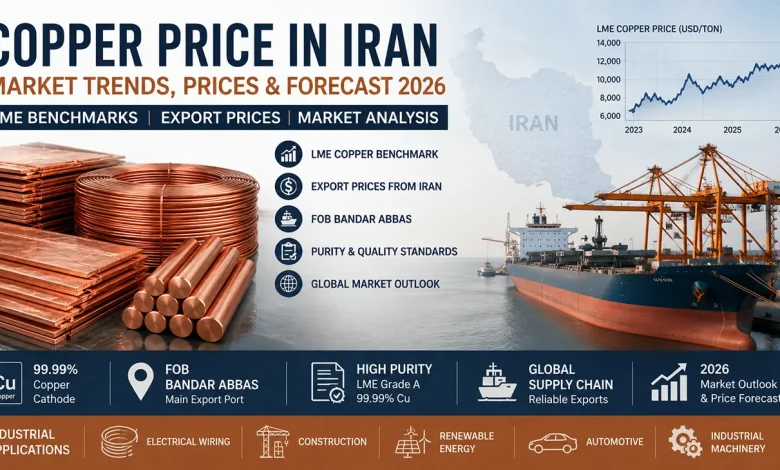
Today, the Iranian copper industry offers a combination of large mineral reserves, relatively low production costs, expanding industrial capacity, and strong regional export access. These advantages have positioned Iran as an emerging supplier of copper cathodes, copper wire rods, concentrates, and semi-finished copper products for buyers across Asia, the Middle East, and neighboring markets.
For importers and industrial buyers, understanding the Copper Price in Iran is no longer only about tracking commodity trends. It is also about identifying sourcing opportunities, evaluating supplier reliability, comparing export pricing with international benchmarks, and securing access to competitively priced raw materials in a volatile global market.

In recent years, interest in the Iran copper cathode price and Copper wire rod price in Iran has increased significantly among manufacturers, cable producers, traders, and infrastructure companies looking for alternative sourcing destinations outside traditional suppliers.
 .
.
Key Market Insight:
Iran is becoming an increasingly attractive source of copper products for international buyers due to its competitive production costs, large mineral reserves, expanding refining capacity, and strategic export access to Asian and Middle Eastern markets. Rising global demand from electric vehicles, renewable energy infrastructure, construction, and power transmission industries has also increased interest in the Copper Price in Iran, particularly for copper cathodes and wire rods.
Iran’s Position in the Global Copper Supply Chain
Iran is home to some of the largest copper reserves in the Middle East and has developed a vertically integrated copper industry that includes mining, concentration, smelting, refining, and downstream manufacturing. The country’s copper sector is primarily supported by major mining regions such as Kerman Province, where some of Iran’s most important copper operations are located.
One of the key strengths of the Iranian market is its ability to supply both raw and semi-processed copper products. International buyers can source copper concentrate, refined copper cathodes, copper wire rods, and various industrial copper derivatives from Iranian producers and exporters.
Unlike many commodity-exporting countries that rely heavily on raw mineral exports, Iran has gradually expanded its value-added copper production capabilities. This is particularly important for buyers seeking stable industrial-grade materials suitable for manufacturing, cable production, electrical equipment, and construction applications.
Another major advantage is geography. Iran provides direct access to major regional markets through the Persian Gulf and the Gulf of Oman, creating shorter shipping routes to many Asian, Middle Eastern, and even East African destinations. This logistical position can reduce transportation costs and improve delivery flexibility for international copper buyers.
In addition, Iranian copper producers often benefit from comparatively lower energy and operational costs, which can influence the overall Iran copper export price and create pricing advantages for foreign importers under the right market conditions.
| Copper Product | Main Industrial Use | Export Potential | Why Iran Can Be Competitive |
|---|---|---|---|
| Copper Cathodes | Cable manufacturing, electrical equipment, industrial production | Very High | Large copper reserves, competitive production costs, and strong regional export access |
| Copper Wire Rod | Electrical wiring, transformers, power transmission, infrastructure projects | High | Growing downstream capacity and demand from regional electrical industries |
| Copper Concentrate | Smelting, refining, and further copper processing | High | Strong mining base and access to major copper deposits in Iran |
| Copper Tubes & Pipes | HVAC systems, construction, plumbing, and industrial installations | Medium | Competitive labor and manufacturing costs for regional buyers |
| Copper Sheets & Strips | Electronics, industrial fabrication, automotive components | Medium | Expanding value-added copper processing capabilities |
Among these products, copper cathodes and copper wire rod remain the most important export-oriented segments of the Iranian copper industry. Their growing international demand, combined with Iran’s production advantages and regional logistics position, has made them increasingly attractive for foreign buyers comparing the Copper Price in Iran, the Iran copper cathode price, and the Copper wire rod price in Iran.

Copper Price in Iran in 2026
The copper market in Iran is heavily influenced by global commodity trends, exchange rate fluctuations, domestic industrial demand, export regulations, and international benchmark pricing such as the London Metal Exchange (LME). As a result, the Copper Price in Iran can change rapidly depending on both domestic and international economic conditions.
In 2026, Iranian copper prices continue to closely follow global copper demand, particularly from sectors such as electric vehicles, renewable energy systems, power infrastructure, telecommunications, and heavy manufacturing. Rising worldwide demand for conductive metals has strengthened interest in sourcing copper products from alternative producing countries, including Iran.
For foreign buyers, one of the most important considerations is the difference between international benchmark prices and local export pricing. In many cases, the Copper price per ton in Iran may offer competitive opportunities compared to suppliers in Europe or East Asia, especially when exchange rates, transportation distances, and regional trade advantages are considered.
However, pricing structures vary significantly depending on several factors:
- Product type and purity level
- Copper cathode grade specifications
- Wire rod diameter and technical standards
- Export volume and contract size
- Packaging and shipment method
- FOB, CFR, or CIF trade terms
- Destination country and logistics costs
Because of these variables, industrial buyers often compare multiple supplier quotations before making purchasing decisions.
Estimated Copper Product Prices in Iran (2026)
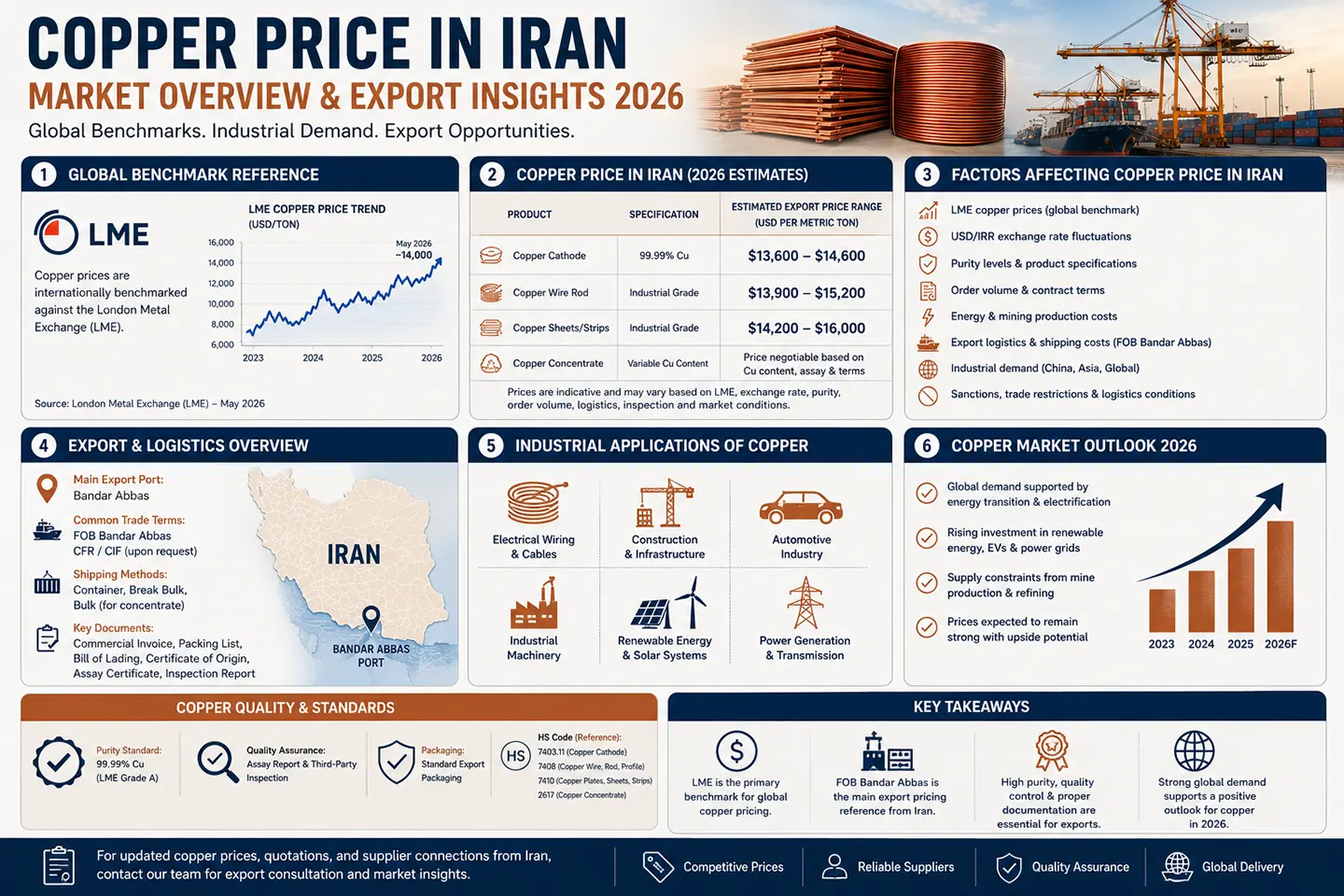
The following figures are indicative export market ranges based on May 2026 global copper benchmarks. Actual Copper Price in Iran may vary depending on LME copper prices, product purity, order volume, exchange rates, logistics costs, inspection requirements, and final trade terms.
| Product | Purity / Specification | Estimated Export Price Range (USD per Metric Ton) | Common Trade Term |
|---|---|---|---|
| Copper Cathode | 99.99% Cu | $13,600 – $14,600 | FOB Bandar Abbas |
| Copper Wire Rod | Industrial Grade | $13,900 – $15,200 | FOB / CFR |
| Copper Sheets & Strips | Industrial Grade | $14,200 – $16,000 | FOB Iran / CFR |
| Copper Concentrate | Variable Cu Content | Negotiated based on Cu content, assay, TC/RC, and contract terms | Bulk Shipment |
Note: Copper cathode and wire rod prices are usually linked to international benchmarks such as the London Metal Exchange (LME), plus regional premiums, supplier margins, logistics costs, and contract-specific conditions. The above ranges should be treated as market references, not fixed selling prices.
Copper prices in Iran may fluctuate depending on global copper benchmarks, exchange rates, purity levels, order volume, logistics conditions, and international market developments.
Global Copper Price Benchmark
International copper prices are commonly benchmarked against the London Metal Exchange (LME), which plays a major role in determining export-oriented copper pricing worldwide.
Many exporters, traders, and industrial buyers use LME copper prices as a reference point when evaluating the Copper Price in Iran, copper cathode contracts, and international copper trade agreements.
Reference Source: London Metal Exchange Copper Prices
Average Copper Cathode Price in Iran
Copper cathodes remain one of Iran’s most important export-oriented copper products. These refined copper sheets are widely used in cable manufacturing, electronics, industrial equipment, automotive production, and power infrastructure.
The Iran copper cathode price is generally linked to LME benchmark pricing while also reflecting domestic currency movements, refining costs, export demand, and supplier-specific conditions. Prices can vary based on cathode purity, production standards, order quantity, and delivery terms.
International buyers looking to Buy copper cathode from Iran typically evaluate suppliers based on:
- Copper purity and certification
- Production consistency
- Export experience
- Monthly production capacity
- Packaging standards
- Delivery reliability
- Payment flexibility
Large-volume buyers may also negotiate discounts based on annual contracts or long-term procurement agreements.
Copper Wire Rod Price Trends
Copper wire rods are another important segment of Iran’s copper industry. These products are extensively used in electrical cable production, transformers, motors, industrial wiring, and infrastructure projects.
The Copper wire rod price in Iran depends on both raw copper input costs and downstream manufacturing conditions. Demand from construction, electricity transmission, renewable energy projects, and industrial expansion continues to support this market segment.
For many foreign manufacturers, Iranian wire rods can offer an attractive balance between pricing competitiveness and industrial quality, particularly for regional buyers seeking cost-efficient sourcing options with relatively short shipping routes.
Copper Products Iran Can Export Competitively
Iran’s copper industry is not limited to raw mineral extraction. Over the years, the country has expanded its downstream copper processing capabilities and now exports a range of industrial copper products to regional and international markets. This growing industrial base has improved the overall competitiveness of Iranian copper products in sectors such as construction, energy, manufacturing, telecommunications, and infrastructure development.
Among the most important export-oriented products are copper cathodes, copper wire rods, copper concentrates, tubes, sheets, strips, and semi-finished industrial copper materials. Each product category serves different industrial applications and attracts different types of international buyers.
Copper Cathodes
Copper cathodes are among the most valuable and internationally traded products in the Iranian copper sector. These refined copper plates are widely used in cable manufacturing, electrical systems, industrial machinery, renewable energy equipment, and automotive production.
For many foreign buyers, the main attraction lies in the balance between industrial quality and competitive pricing. Depending on market conditions, the Iran copper cathode price can offer attractive sourcing opportunities compared to suppliers in other regions.
Copper Wire Rods
Copper wire rods are another important export segment due to growing global demand from electrical infrastructure and power transmission projects. Iranian wire rod manufacturers supply products used in electrical cables, transformers, industrial wiring, and construction industries.
As renewable energy investments continue to grow worldwide, demand for conductive copper products is expected to remain strong in the coming years.
Copper Concentrates
Iran also exports copper concentrates produced from domestic mining operations. These materials are mainly purchased by smelters and industrial processors that refine copper further before manufacturing end products.
Because of Iran’s large mineral reserves, copper concentrate exports remain strategically important within the country’s mining and metals sector.
Value-Added Copper Products
One of the long-term opportunities for the Iranian copper industry is the expansion of value-added copper manufacturing. Instead of exporting only raw or semi-processed materials, Iranian producers are increasingly moving toward industrial products with higher profit margins and broader international applications.
This transition could strengthen Iran’s position in regional copper supply chains while creating additional opportunities for foreign importers and industrial partners.
Copper Cathode Suppliers in Iran
Iran is home to several large-scale copper producers and industrial manufacturers involved in mining, refining, smelting, and downstream copper processing. These companies play a central role in supplying both domestic industries and export markets.
For international buyers looking for a reliable Copper cathode supplier in Iran, supplier evaluation is extremely important. Price alone should never be the only consideration. Buyers should also assess production consistency, export experience, product specifications, logistics capabilities, and quality control procedures.
What International Buyers Usually Check
Foreign importers and industrial buyers commonly evaluate suppliers based on the following factors:
- Copper purity and technical specifications
- Compliance with international industrial standards
- Production capacity and delivery reliability
- Export documentation and customs experience
- Packaging and shipment methods
- Payment terms and trade flexibility
In industrial commodity markets, long-term supplier reliability often matters more than short-term price fluctuations.
Production Capacity and Export Infrastructure
Iran benefits from a relatively developed mining and metals infrastructure compared to many regional competitors. Access to industrial zones, transportation networks, ports, and energy resources supports large-scale copper production and export activity.
The country’s location also creates logistical advantages for buyers in the Middle East, South Asia, Central Asia, and nearby African markets.
Iran Copper Export Market
Copper exports have become an important part of Iran’s non-oil industrial trade. As global copper demand continues to increase, interest in Iranian copper products has also expanded among regional traders, manufacturers, and industrial importers.
Several factors contribute to the growth of the Iran copper export price market:
- Rising global copper consumption
- Expanding renewable energy investments
- Growth in electrical infrastructure projects
- Increasing demand for industrial raw materials
- Regional transportation advantages
Main Export Destinations
Iranian copper products are commonly exported to neighboring countries, Asian markets, and selected international industrial buyers. Regional proximity often reduces shipping costs and delivery times compared to more distant suppliers.
Logistics and Shipping
Most copper exports from Iran are transported through southern ports connected to the Persian Gulf. Depending on shipment size and destination, exporters may use container shipping, bulk cargo transportation, or multimodal logistics solutions.
Shipping costs, insurance conditions, customs regulations, and sanctions-related considerations can all influence final export pricing and delivery schedules.
Buy Copper Cathode from Iran: What Importers Should Know
International buyers interested in sourcing copper from Iran should carefully evaluate both market conditions and supplier credibility before entering into commercial agreements.
While the Copper Price in Iran may create attractive sourcing opportunities, successful transactions also depend on logistics planning, quality verification, payment security, and clear contract structures.
Minimum Order Quantities and Trade Terms
Many exporters work with wholesale volumes and industrial-scale contracts. Minimum order quantities may vary depending on product type, packaging method, and export destination.
Trade terms such as FOB, CFR, and CIF can significantly affect the final cost structure for buyers.
Quality Inspection and Verification
Before finalizing purchases, importers often request:
- Product analysis reports
- Purity certificates
- Third-party inspection documents
- Photos and videos of production and packaging
- Sample shipments for industrial testing
This is especially important for buyers using copper materials in electrical, manufacturing, or infrastructure applications where technical consistency is critical.
Working With Manufacturers vs Trading Companies
Some international buyers prefer direct cooperation with manufacturers, while others work through export trading companies that manage sourcing, documentation, logistics, and negotiations.
Each approach has advantages depending on the buyer’s purchasing volume, experience level, and operational requirements.
Copper Price Forecast for 2026
Global copper demand is expected to remain strong throughout 2026 due to long-term industrial and energy trends. Copper continues to play a critical role in electric vehicles, battery systems, renewable energy infrastructure, data centers, telecommunications, and power transmission projects.
Because of these structural demand drivers, many analysts believe the global copper market may remain under supply pressure in the coming years.
Sources & Market References
The pricing analysis and market discussion in this guide are based on international copper benchmarks, commodity market references, and publicly available industrial and trade data. These sources help buyers evaluate the Copper Price in Iran in relation to global copper markets, export pricing mechanisms, and industrial demand trends.
- London Metal Exchange (LME):
Global copper benchmark prices used by traders, producers, and industrial buyers.
London Metal Exchange Copper Prices
- International Copper Study Group (ICSG):
Global copper supply, demand, mine production, refined copper use, and market balance reports.
International Copper Study Group
- World Bank Commodity Markets Outlook:
Commodity price forecasts, including metals and minerals market trends.
World Bank Commodity Markets
- IMF Primary Commodity Prices:
International commodity price data used for macroeconomic and trade analysis.
IMF Commodity Prices
- Iranian mining and industrial export reports:
Domestic mining, metals production, export capacity, and industrial development references from Iranian official and sectoral sources. - International energy transition reports:
Demand-side references related to copper consumption in electric vehicles, renewable energy, power grids, construction, and electrification projects.
Because copper is a globally traded industrial metal, actual export quotations from Iran may differ from benchmark
prices depending on purity grades, contract volume, FOB or CFR terms, logistics costs, inspection requirements,
destination market, and supplier-specific conditions.
Factors Supporting Higher Copper Prices
Several market forces may support higher global copper prices:
- Rapid EV production growth
- Renewable energy expansion
- Increasing electricity infrastructure investment
- Rising industrial demand in developing economies
- Limited growth in global mining supply
These trends could also influence the future Copper Price in Iran and increase international interest in regional copper suppliers.
Potential Risks and Market Volatility
Despite strong long-term demand, copper markets remain sensitive to:
- Global economic slowdowns
- Exchange rate volatility
- Geopolitical tensions
- Commodity market speculation
- Energy price fluctuations
As a result, both buyers and exporters must closely monitor market conditions before entering large-scale procurement contracts.
Frequently Asked Questions About Copper Price in Iran
What affects the Copper Price in Iran?
The price of copper in Iran is mainly influenced by global copper benchmarks such as the London Metal Exchange (LME), exchange rate movements, domestic industrial demand, export regulations, and international commodity market conditions.
Is Iranian copper suitable for industrial applications?
Yes. Iranian copper products, particularly copper cathodes and wire rods, are widely used in industrial manufacturing, electrical infrastructure, cable production, and construction-related applications.
Can foreign buyers import copper directly from Iran?
Depending on trade regulations, logistics conditions, and destination-country policies, international buyers may source copper products from Iranian manufacturers or export trading companies.
Which copper products are most commonly exported from Iran?
Copper cathodes, wire rods, concentrates, sheets, strips, and industrial semi-finished copper products are among the main export-oriented products of the Iranian copper industry.
Why are buyers interested in the Iran copper market?
Competitive production costs, large mineral reserves, expanding refining capacity, and regional export access make Iran increasingly attractive for industrial copper sourcing.
Request Copper Prices from Iran
If you are looking for updated Copper Price in Iran, industrial copper sourcing opportunities, or export quotations for copper cathodes and wire rods, you can contact us through the form below.
Contact Myindustry Consulting Group (MCG)
Our team can help international buyers and industrial companies connect with Iranian copper suppliers, explore export options, and receive market-based pricing information based on product type, order volume, and destination country.
Conclusion
Iran is gradually strengthening its position within the regional and international copper market. With large mineral reserves, expanding industrial capacity, competitive production costs, and strategic export access, the country offers growing opportunities for foreign buyers seeking copper products for industrial and commercial use.
As global demand for copper continues to rise, interest in the Copper Price in Iran, copper cathodes, wire rods, and export-oriented copper products is expected to increase further in the coming years.
For importers, manufacturers, traders, and industrial buyers, understanding the Iranian copper market may create valuable sourcing opportunities in an increasingly competitive global metals industry.